Some cities are just blessed. People flock to them in droves, carrying with them the hopes and dreams of generations that came before, and coming out hungry to tell the rest of the world about the things they saw and did. They write songs praising the neon lights, and the way the city still shines even in the rain. They tell stories of loves lost, lives passing by each other and barely connecting, dreams that make it to reality, and the tragic many that don’t. These songs and stories are shared, inviting others to come to the table to experience the feast for themselves, and the lore lives on.
When these cities take on a life of their own, they become cemented as some cohesive character, making them recognizable even to those that haven’t been. Paris is always romantic. New York is always suited up, and ready for a conference call with foreign investors at 4 AM. Hong Kong never sleeps. For some reason Tokyo has a split personality: one moment it is this big, bustling capital, intimidating in its fullness and variety, but then empty and desolate the next. It’s the land of empire and samurai, but also of hikkikomori and Yakuza.
In the afterglow of my birthday trip to Tokyo, I’m reviewing some films I saw recently in which the sprawling metropolis itself plays a character. Tokyo is naturally featured in numberless films, being the capital of a major global power. And yet, it’s not always as present as it is in these two films. You can’t just uproot their people and tell the story set somewhere else, even if the streets look almost exactly the same. They aren’t so much set in Tokyo, but are of Tokyo. Each story is a minutiae that, together, make up the varied and multifaceted tapestry.
Yes, I will be writing about my Tokyo trip in another post.
Tokyo! (2008, dir. Michael Gondry, Bong Joon-ho, and Leos Carax)
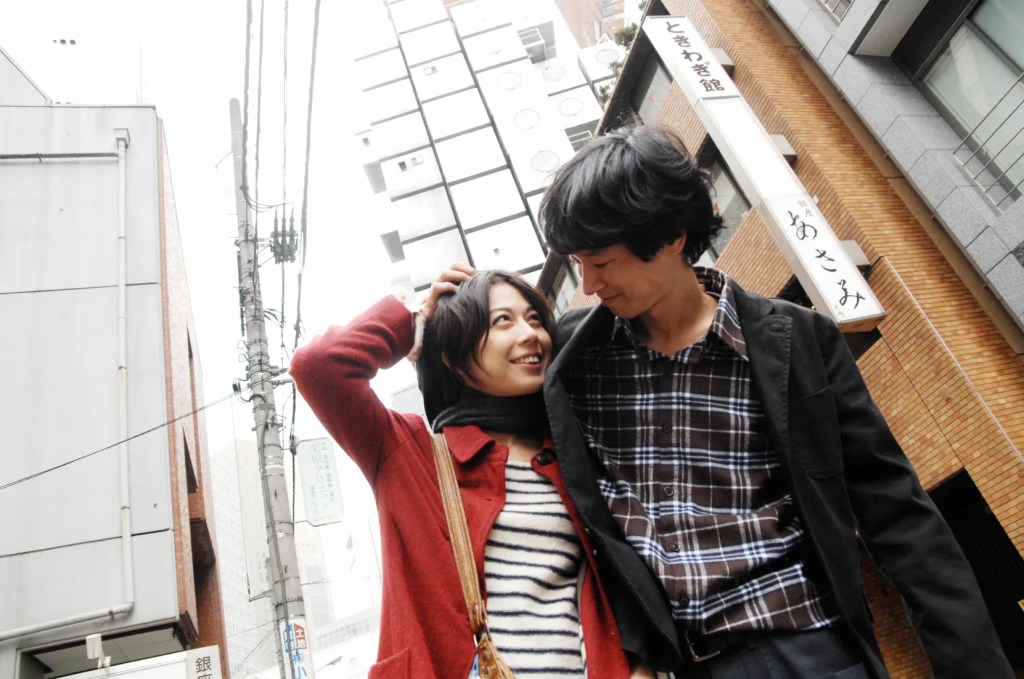
Tokyo! is an anthology film released in 2008 that consists of three short films, each directed by a different filmmaker, exploring the theme of urban life in Tokyo. The first film, directed by Michel Gondry, follows the story of a young couple trying to make a living in the city, while the second film, directed by Leos Carax, is a surreal portrayal of a mysterious creature living in the sewers of Tokyo. The third and final film, directed by Bong Joon-ho (lately of Parasite fame), tells the story of a man who becomes a victim of his own invention: a unique lifestyle that takes Tokyo by storm. The film received critical acclaim for its innovative approach to storytelling and its visually stunning cinematography, capturing the vibrancy and energy of Tokyo as a metropolis.
Gondry’s contribution to Tokyo!, titled “Interior Design,” tells the story of a young couple, Hiroko and Akira, who move to Tokyo with hopes of making a living as filmmakers. However, their dreams are quickly dashed as they struggle to find work and afford basic living expenses in the city. Hiroko becomes increasingly frustrated with their situation and begins to emotionally withdraw from the situation, refusing to leave their cramped apartment, while Akira takes on odd jobs to make ends meet.
As the story progresses, the couple’s apartment begins to take on a life of its own, reflecting Hiroko’s emotions and frustrations. The walls and furniture move, and the apartment transforms into different surreal and imaginative spaces. Meanwhile, Akira becomes increasingly desperate and takes on a dangerous job that puts him in harm’s way.
My favorite entry though is the third and final story (by Bong Joon-ho) in Tokyo!, called “Shaking Tokyo”. The story follows the life of a hikikomori named Mr. Takashi, played by Teruyuki Kagawa, who has shut himself inside his apartment for over a decade. He lives a highly structured and isolated life, ordering everything he needs online and only venturing outside to collect his packages. This film was quite a treat having just lived through the early years of the COVID-18 pandemic.
Hikkikomori is used to describe a contemporary phenomenon in which individuals, usually young adults, withdraw from social interaction and isolate themselves in their homes for extended periods, sometimes even for years. The term is itself used to refer to these individuals. Hikkikomori often have difficulty functioning in society, including attending school or work, and often rely on family members for support. While the phenomenon is not exclusive to Japan, it has become a significant issue in the country, where it is estimated that hundreds of thousands of people are affected by hikkikomori. The reasons for hikkikomori vary, and it can be due to social pressure, anxiety, depression, or other psychological issues.
In Mr. Takashi’s case, we never quite learn the reasons he has decided to withdraw from everyday life, but his behavior suggests an irrational fear of the dangers that lurk in the outside world. Having created a perfect setup in his home, he appears to be firm on never again stepping foot outside. That is until one day, while receiving a delivery, Mr. Takashi falls in love with the delivery woman and decides to break out of his self-imposed isolation to pursue her. However, this decision leads to a series of unexpected events that force him to confront the outside world and question his previous way of life.
Bong Joon-ho’s masterful direction, combined with the excellent performances of the cast, creates a powerful and thought-provoking tale that leaves a lasting impression. The story’s use of surreal and fantastical elements adds a layer of depth to the narrative, reflecting the protagonist’s internal struggle as he navigates an uncertain and at times hostile world.
Like Someone In Love (2012, dir. Abbas Kiarostami)

Like Someone in Love is a 2012 film directed by Iranian filmmaker Abbas Kiarostami. The film tells the story of a young woman named Akiko, who works as a prostitute in Tokyo to support her studies, and her encounter with an elderly professor named Takashi.
The film unfolds over the course of a single day and night, during which Akiko is sent by her boss to meet with Takashi. However, their initial meeting does not go as planned, and the two end up spending an evening together, sharing intimate conversations and experiences.
Like Someone in Love is a deeply introspective and contemplative film that explores themes of loneliness, connection, and the complexities of human relationships. Kiarostami’s use of long takes and subtle visual storytelling creates a slow-paced and meditative atmosphere that allows the audience to immerse themselves in the characters’ inner worlds. The film’s ambiguous and open-ended ending leaves much to interpretation, challenging the audience to consider the deeper meanings and implications of the story.
What else is there to say about this film except that it’s among the most beautiful piece of expressionist cinema I’ve seen. Kiarostami can really pull off a driving shot (there’s quite a lot of them here) in that the lingering scenes nevertheless still manage to keep the plot and the character interest going. Rin Takanashi’s acting leaves some to be desired, but she does embody in some ways Akiko’s powerless nature, and the projection of strength and composure she wishes to own.
Kiarostami’s use of cinematography in Like Someone in Love is particularly effective in reflecting the emotions felt by Akiko throughout the film. One of the most notable techniques he uses is the framing and composition of shots, which often places Akiko in the foreground, while the background remains out of focus or blurred. This creates a sense of isolation and detachment, reflecting Akiko’s feelings of loneliness and disconnection from the world around her. Additionally, Kiarostami frequently uses long takes and slow camera movements to create a contemplative and meditative atmosphere, allowing the audience to fully immerse themselves in Akiko’s inner world.
Another technique used by Kiarostami is the use of reflections and mirrors, which serve as a visual metaphor for the duality and complexity of Akiko’s character. In several scenes, Akiko is seen reflected in mirrors or other reflective surfaces, highlighting the multiple roles she must play in her life, as both a student and a prostitute. These reflections also serve to create a sense of fragmentation and disorientation, reflecting Akiko’s internal conflict and confusion.
Overall, Kiarostami’s use of cinematography in Like Someone in Love is a masterful reflection of the emotional and psychological journey of Akiko, creating a deeply introspective and contemplative film that lingers in the mind long after viewing.
 Dominic Dayta
Leave a comment