The following is a blog post regarding the one week Tokyo trip my wife and I took for my twenty-sixth birthday. I’ve decided to split it in three parts. Part II coming later.
As we would learn too well in our trip: people tend to go anywhere except their own neck of the woods. We had already been in Japan six months but had never really bothered to explore the neighboring areas of Osaka except for Namba and Nippombashi, where we visited practically a couple of times every month. So it was with a pint of embarrassment that my wife and I scrambled around Umeda, under a light drizzle, looking for the Willer Bus terminal. For my twenty sixth birthday this year, my wife and I were spending a week in Tokyo. I had the hotel booked even before I arrived in Japan to start my doctoral studies. Fast forward to two days before my birthday, which also happened to be my father’s birthday, we were taking a mid-tier sleeper bus that would take us across the nearly four hundred kilometers to Tokyo.
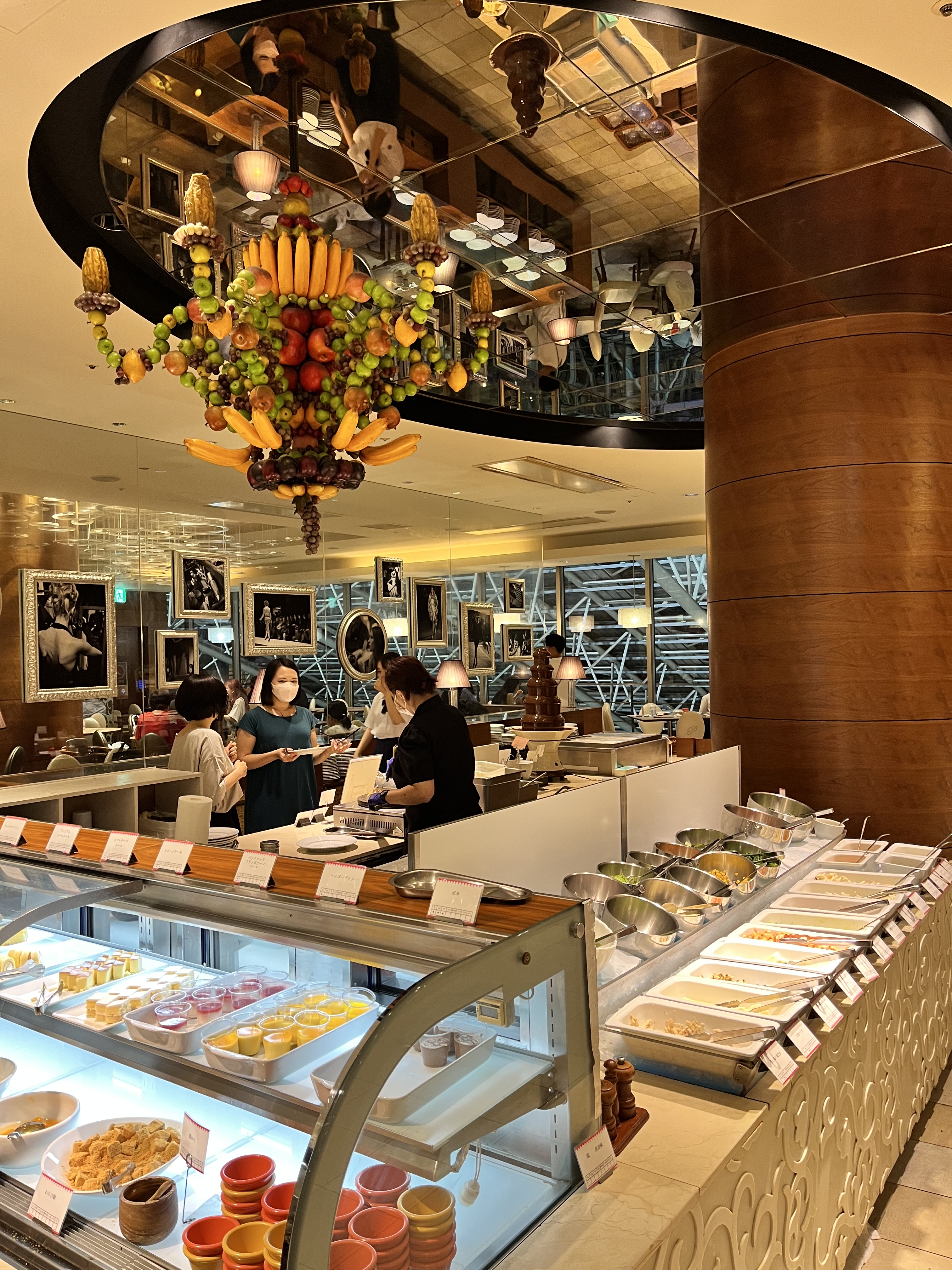
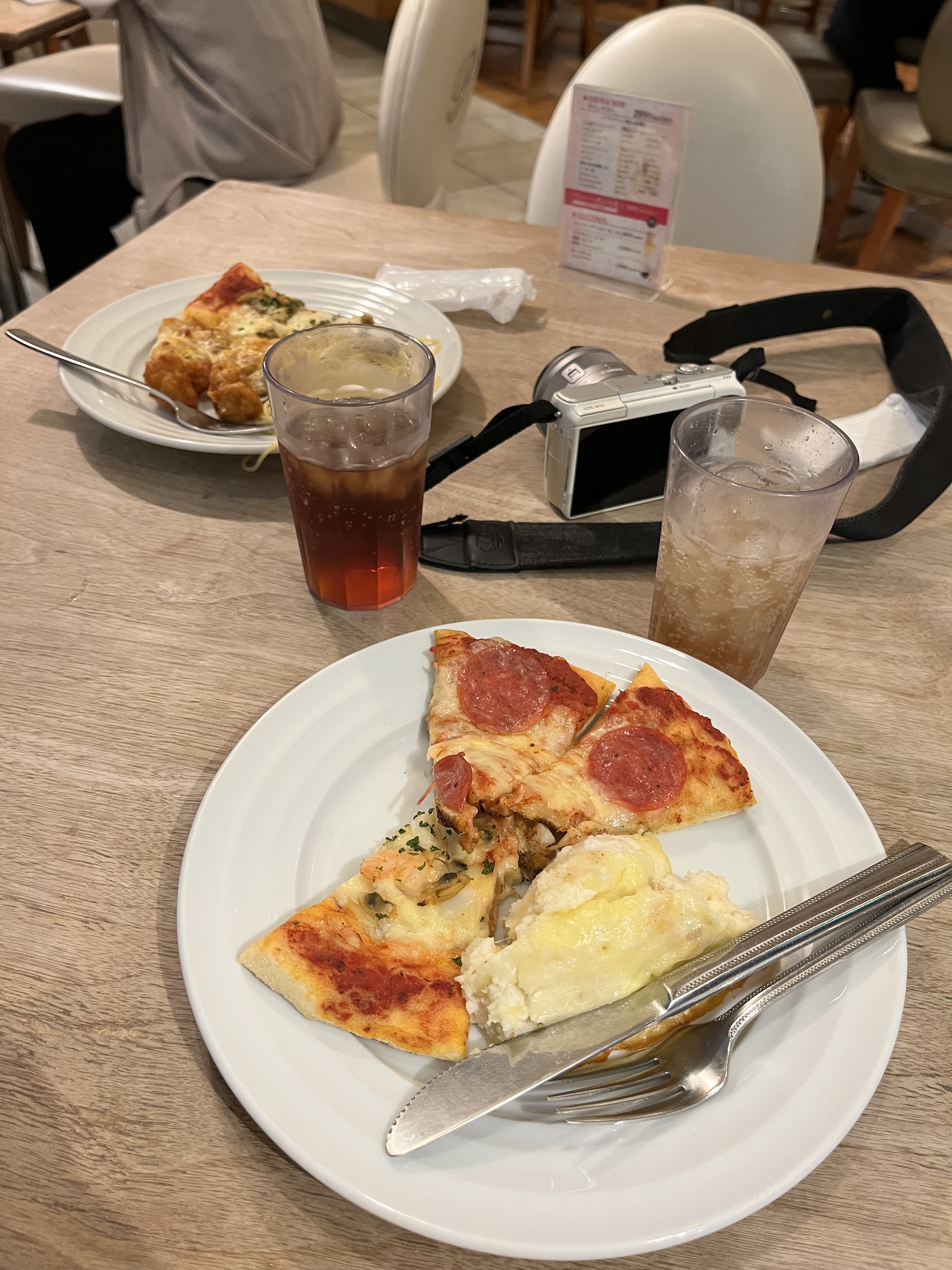
The Willer Bus company’s Osaka terminal was located at the first floor of the Umeda Sky Building. I took assurance in the thought the building’s name suggested it’d be visible in the skyline the moment we emerged from the Umeda subway station and didn’t bother inspecting Google maps as closely as I should have. From Umeda station, we ambled, luggage in tow, towards JR Osaka station and dined at The Platinum, an all-you-can-eat buffet that resembled the likes of Yakimix, Dad’s Buffet, and Vikings, all my favorites from back home. For the price of 3,000 yen each we got to dine on a respectable variety of pasta, pizza, fried chicken, and various others following some indeterminable theme: is it supposed to be American or Chinese? We were seated at the back of the establishment, where a wide panoramic window looked over the inside of the station. Within the next hour we were bloated on fried chicken, spaghetti, soup dumplings, ice cream, and crepes, watching the trains passing through the platforms underneath us like a pair of sedated monkeys. We hadn’t yet left the Kansai area and we were already about ten thousand in the hole.

The next hour wasn’t quite as enchanting. A light rain had come down, and my cellular data was coming on the fritz. As a result, we kept making wrong turns and getting too late to each crossing. I had my eyes set upward, looking for a Sky Building that was, disappointingly, somehow absent from the sky. Finally, we made it to an underpass behind the Yodoyabashi Camera, and soon enough there it was: the Umeda Sky Building, which was actually two towering skyscrapers, with the famous circular observatory set between them like a canopy of steel and glass. The bus terminal took up an unassuming corner of the East building. Tired from the commute and still bloated with buffet food, my wife and I hoped for the next six hours spent knocked out on the bus.
Sleepless on the bus
I am a nerd for trains. The first time I visited Japan, in 2018, for a statistics conference that was to happen in Kyoto, I opted to enter via Nagoya instead of Osaka, just so I have an excuse to take the high speed bullet train at a minimal cost. True, I could have also taken the bullet train from Osaka, but that leg of the trip lasted only 14 minutes, as opposed to the thirty minutes that I got to spend wondering at how smoothly we – ahem – bulleted through the Kansai plain. It was, as I would later describe it to friends and coworkers, the perfect distance-to-price ratio. I even got to eat an ekiben onboard. How fun! While I would have been elated at the prospect of spending two hours on the bullet train, I unfortunately had to contain my demanding inner child this time so we could have more money to spend on what was sure to be financial recklessness in Japan’s bustling capital (more on that in a minute). The Willer buses sold at a third of the price of a single Shinkansen trip – and they were having a time sale to boot. My inner child whining, I decided we can take the Shinkansen another time.
I don’t really have anything negative to say about Willer or any other night buses out there. It was cheap, and it got us to Tokyo. They also delivered on pretty much everything they said they would: you got a seat that reclined up to 120 degrees, with a canopy to cover your face from the light that would come on every now and again, or if some restless passenger ahead of you decided to open up their phones with the screen brightness turned all the way up. They also lent each passenger a blanket, though one would wonder what for as the temperature in the bus never made it lower than room temperature. The night bus is often touted as an economical alternative to the Shinkansen, because it not only saved you on the train trip, but also sleeping on the bus meant one night less in hotel cost.
Except sleeping inside a large metal basket plying along the highway does not for a restful night make. Or maybe I’m just not the type to be sleeping inside moving things. Every now and again the fatigue would get to me, and I’d make it to something resembling a Power Nap before the driver suddenly accelerating through a free expanse of road jolted me back to wakefulness. It also didn’t help that every couple of hours or so, we would make a stop at a highway rest area and the lights would come back on inside the bus. Unfortunately for everyone on board, the rest stops are crucial as the bus doesn’t come with a restroom on board. Ironic: I was having more trouble sleeping on a bus actually meant for sleeping than I ever did with the EDSA buses I used to do my work commutes on. At one point I contemplated buying a can of Asahi on the next rest stop to maybe help induce some drowsiness, but that would have come with the risk of a raging bladder. I had no idea when and where we would be stopping next, so I decided that was too much risk to take on.
By six in the morning and with just barely an hour of driving travel left, we passed Yokohama. The accumulating traffic meant the bus would also start to slow down to a pace more amenable to actually sleeping, but by then sunlight was already peeking through the blackout curtains. I’d also somehow managed maybe half an hour of sleep somewhere in those six hours thanks to sheer exhaustion. Before we could notice it, the bus had made its final stop at the Kajibashi Parking Lot of JR Tokyo Station, and we were finally let out on a city still just getting ready for the morning. Literally: none of the coffee shops or restaurants were open yet at the station except for the McDonalds and a Starbucks (thank you, indulgent western mores). We decided to stop at the latter for some coffee and a breakfast, contemplating the seemingly endless hours left before we could check in to our hotel. Taking the sleeper bus seemed like a good deal if you already had a place of your own to retreat to after the overnight commute. Otherwise, there’s really no point getting to Tokyo so early given there’s nothing to do. After breakfast, my wife and I would wear our feet out strolling along Ginza and Nihombashi, walking by shuttered bookshops and tech emporiums, plus a couple more open Starbucks. Look at all the fun Tokyo has to offer… later.
Hogwarts in Tokyo
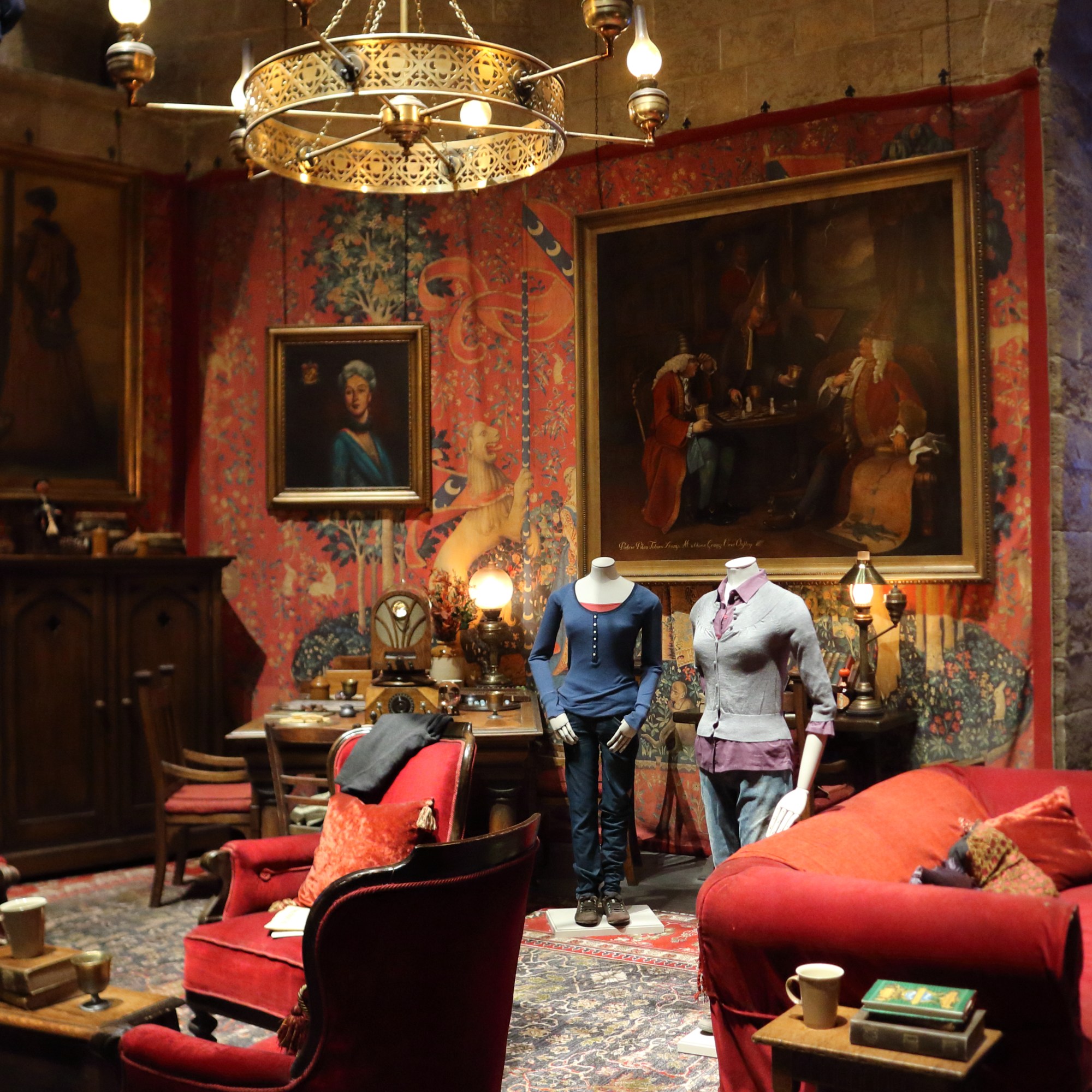
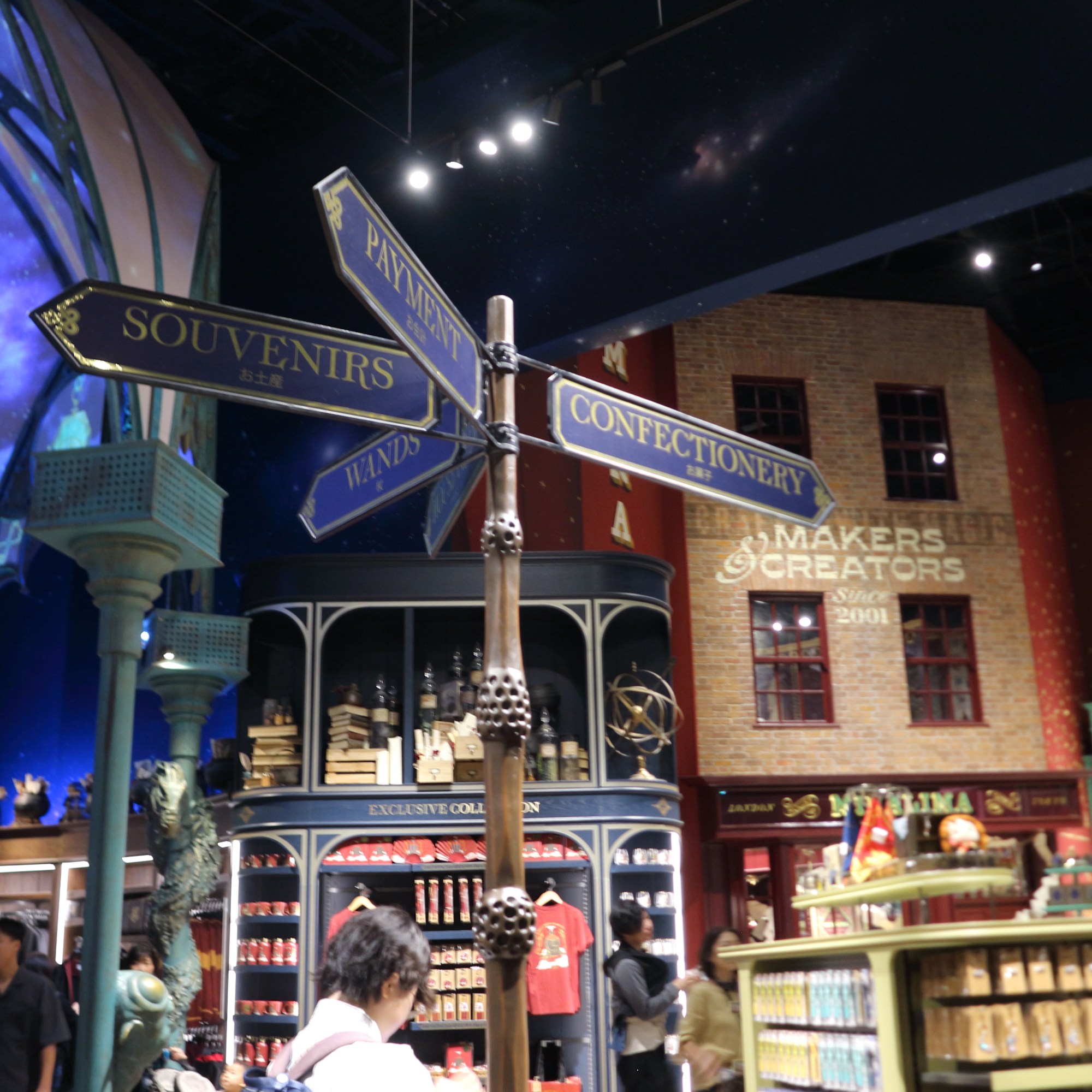
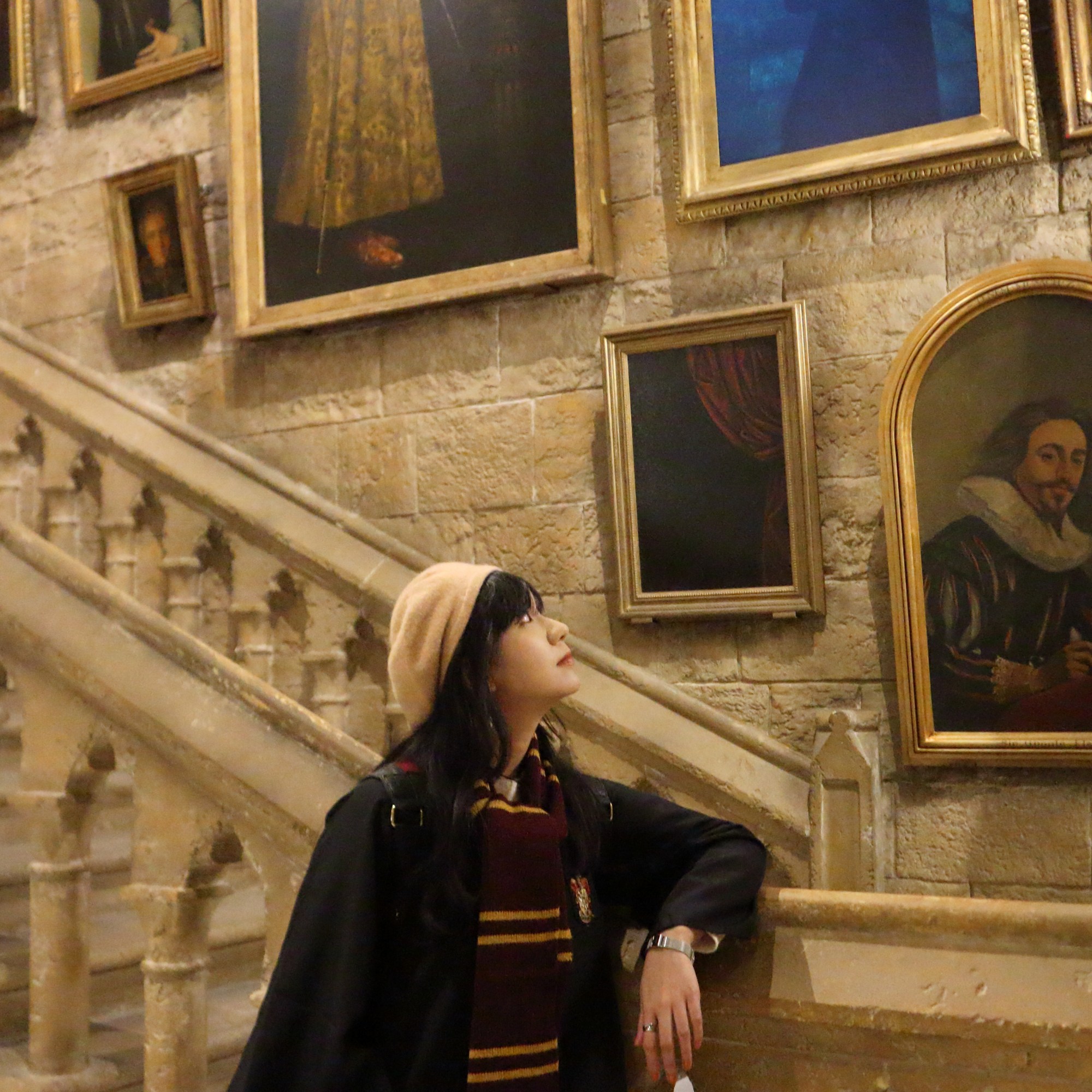
The main event of our trip was on our second day, when we had tickets booked for the Warner Brothers’ Studio Tour for the Harry Potter films. The tour opened July of this year, and is a must-visit for any Harry Potter fan. Unlike the theme park attraction at Universal Studios, the Studio Tour really gives just that: reconstructed set pieces that revealed the intricate art that went into making the world-famous movies. One of the highlights for me is a piece of the Quidditch pitch. Through a live demonstration, we were shown how with some green screen magic and tightly choreographed acting, the single pitch we were standing on could be made to look like the large multi-story pitch seen on film.
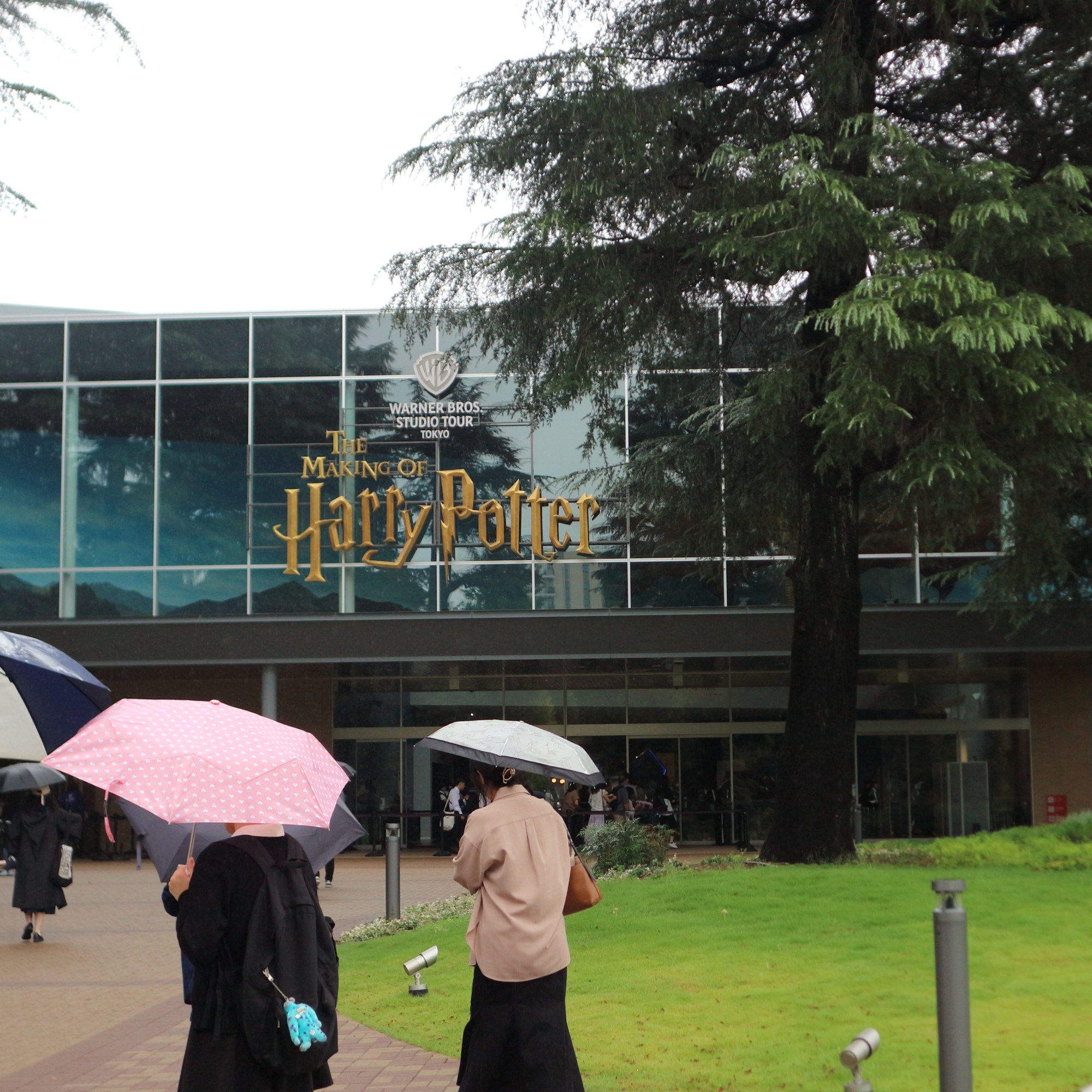
The studio tour is set in an expansive warehouse in Nerima-ku. To get there, we took a train from our hotel in Nihombashi to Shinjuku, and there we took a local line going up to Toshimaen Station. Emerging from Toshimaen Station, we were greeted with flyers for the Tour hanging from street lamps, guiding us and a few other tourists already regaled in their Hogwarts robes towards the exact location. I guess the town doesn’t really have much else going for it, so why not lean all the way in? After a ten minute walk awash in excitement (and some light drizzle), we were greeted by a large poster of young Harry and friends from the first movie. I swear my wife, who’s the biggest Potterhead I know aside from my youngest sister, could have exploded from pure joy right there.
Having an advanced booking system meant that the park is never too crowded. Because we arrived early (we were at the front entrance taking pictures before the clocks even hit 9:00 AM), there were even fewer people around. We started the tour on a strong note: my wife picked up a Gryffindor robe while I donned a nice, blue Ravenclaw sweater from the gift shop so we’d be in uniform for the pictures. We also got a small luggage with the Hogwarts insignia, and a very kawaii Hedwig plushie you can perch on your arm or shoulders. Thirty thousand yen, and we had just walked in. The guy behind the counter was smiling from ear to ear as he rung up our orders, presumably because he could tell they’d make a killing from us. We would learn that this would be a running theme for the remainder of the tour: it’s like you’re being robbed of your hard-earned cash, but somehow you’re happy about it. Pre-tour shopping complete, we finally embarked on the tour itself.
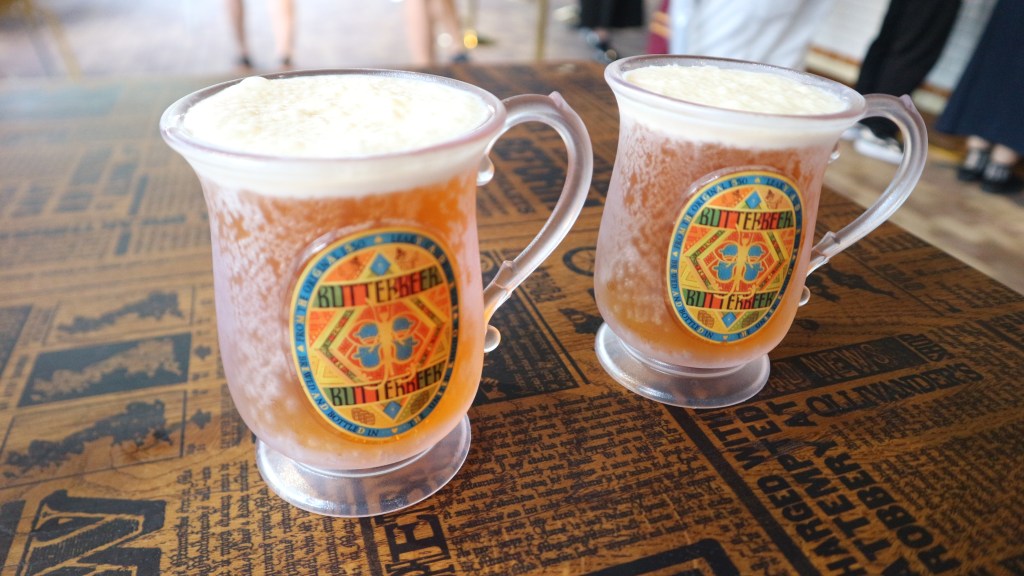
Halfway through the tour, we are lead for a brief rest at the Butterbeer Bar. For a little over a thousand yen, you can get a taste of Butterbeer with a souvenir mug that you bring home with you. My wife and I got one each, with a cup of caramel popcorn to share. While drinking, I shared my theory with my wife regarding the recipe behind butter beers: while writing, Rowling may have had a more alcoholic drink in mind, probably based on some British or Scottish brew link. With the arrival of the films, and as the theme park potential of the series became an inevitability, Rowling and company were cornered into actually figuring out a recipe that the books’ predominantly underaged and young adolescent audience could order sans any legal hiccups. And so: butterscotch soda! It’s a drink pulled out of a fantasy series so I didn’t really have any expectations, but I was quite pleased with the taste. Granted, I don’t think I’ll ever find myself craving it on a Friday night bender.
Overall, the tour took us six hours to finish, and we weren’t even making a conscious effort of slowing down our pace between exhibits. There was just so much to see, that the 4,000 yen per head price tag to get in suddenly seemed cheap. At one area, you walk into a recreation of Diagon Alley, and walk right up to the doors of shops like Flourish and Blotts, the Weasley Twins’ joke shop, and Ollivander’s. There’s also a life-sized recreation of the Dursleys house on Privet Drive that you can walk into, and peer into Harry’s broom cupboard cum bedroom, the living room that got barraged with acceptance letters from Hogwarts, and the living room with the fat aunt scene from Prisoner of Azkaban still ongoing. At the end of the tour, you enter into a room where you have wand boxes bearing the names of everyone involved in the production of the eight Harry Potter films, plus the Fantastic Beasts spinoffs. Regarding the thousands of wand boxes really drives in the realization that film isn’t just a director’s or the actors’ art. This, I believe, is really the main takeaway of the studio tour: so much work goes into making the shortest of clips, from designing and building the sets, to choreographing every shot and every actor’s movement, to finishing up the sound design and musical score. When we think of ancient art, we tend to associate them with a single master whose hand produced the entire tapestry. It’s probably a hallmark of our contemporary era that we have art that is the result of the active collaboration of hundreds to thousands of creative minds all working together on a single piece.
Coming back from the tour we learned that there are actually two stations at Toshimaen. The subway station, where we alighted from our train, looks just like any other metro station across Japan. Nothing except for a line in the exit directories hinted at the existence of what by now should be the hottest tourist haunt in the town. After the tour, we decided to take a short garden path behind the main street we walked in the morning, and found ourselves at a street level Toshimaen station operated by the Seibu Railway company. The Seibu Toshimaen station appears newly refurbished, retrofitted to the Harry Potter theme with an all-red facade, decorated with owls and witches in pointy hats atop flying broomsticks. There’s even a British style phone booth at the platform area. As I understand it, the studio tour stands on the former location of the Toshimaen Amusement Park, which closed its doors in 2020, and this particular station was built to cater to park goers. A photo from 2009 of the old station entrance gives off a more carnival-like vibe a more carnival-like vibe.
(Continued…)

 Dominic Dayta

Leave a comment