We finally reached Hiroshima past eleven, about six hours since the bus departed from the pick-up point at the Umeda Sky Building in Osaka, and in my estimation an hour since the last rest stop where we had our rushed dinner outside a 7 Eleven. Though I’d done my best to get up and stretch at every stop, my back still felt cramped and nearly buckled when I tried to stand up to retrieve our bags from the overhead bin. Everyday the universe liked to remind me my twenties are on their way out.
Our drop off point was the Bus Center at Hiroshima, on the third floor of the SOGO Shopping Center. Since booking the tickets, we’d been having a good laugh over the name of the building, as it coincided with a notorious motel chain back home. The name seemed just as hilarious to us lit up in large letters on a neon sign in the dark of the city just before midnight. The entire city was blanketed by the same kind of heavy hush as in any Japanese city outside of Tokyo and Osaka. The wheels of our tiny luggage rattled noisily along the pavement as we trudged towards the direction of our AirBNB.
Our path guided us through the historic Motoyasu bridge overlooking the ruins of the dome damaged by the atomic bomb that dropped here in 1945. Lights have been set around the ruined building, making sure no one missed the sight even this late at night. We had days ahead of us to explore the city and take photos in better conditions, but the excitement of immediately coming upon this historic site got the better of us. We stuck around the foot of the bridge for another ten, twenty minutes, taking badly exposed photos of the dome from across the river, as well as the large concrete monument nearby for the children that perished to the bombing.
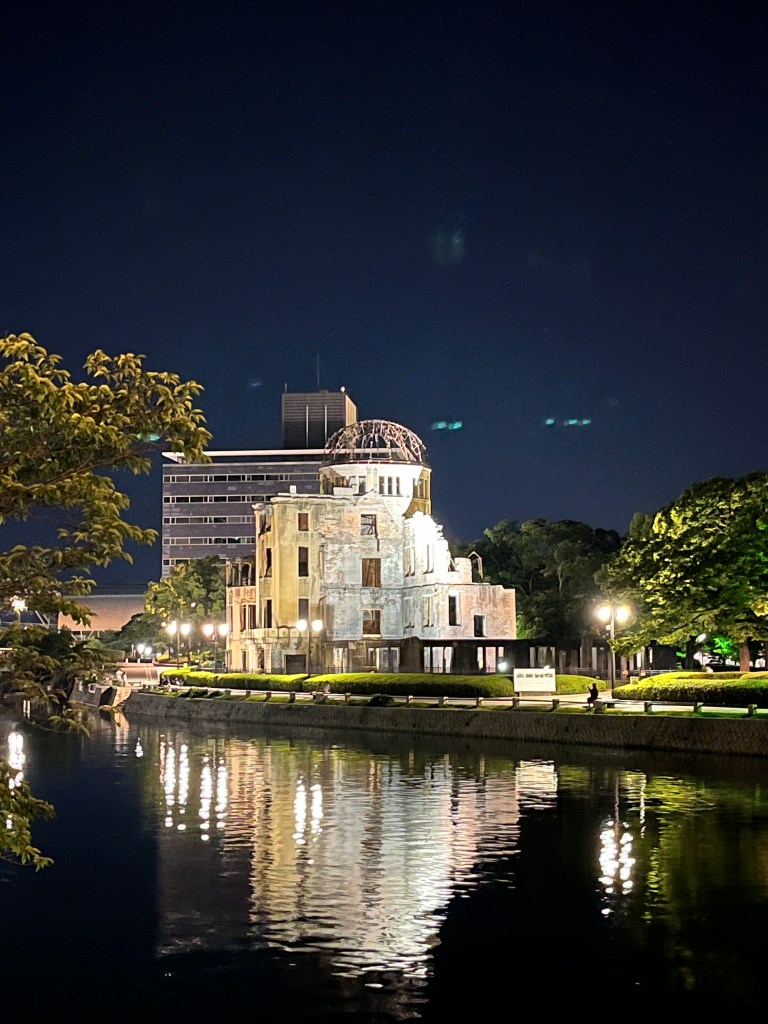
Just across the monument, we walked towards what looked like a bonfire set upon a concrete stage and realized it was another monument: the Flame of Peace, which according to the information plate has been burning continuously since it was lit in 1964. Hardly an hour into our trip and already we had a clear idea of how the rest of our three-day escapade would be. Historic, and with quite a lot of walking.
I learned to my particular pleasure that Hiroshima didn’t have any subways, at least not within the city center. With much of it being on an old river delta feeding out into Hiroshima Bay, the land apparently was too thin and fragile to support a massive underground network. Instead the city is serviced by trams, and some of the old models that operated during the war years continue to run along the rails set on a stylish cobbled path at the center of major roads. On our first morning, we boarded the tram from the station just outside our AirBNB back to the Peace Park and the location of the Atomic Bomb Dome.
The structure has been cemented into the popular imagination, even of those not residing in Japan, as a symbol of the horrific power of the atomic bomb. Before that fateful day in August 1945 though, it was nothing more than another government building in the center of a bustling port city. It used to be the Hiroshima Prefectural Industrial Promotion Hall, designed by Czech architect Jan Letzel. The bomb detonated about 150 meters away from the dome, over the Shima Hospital, and the dome remained the only structure in that vicinity that remained standing. Part of this was due to the building’s durable design, originally intended to withstand the strong earthquakes that are common to the Japanese islands.
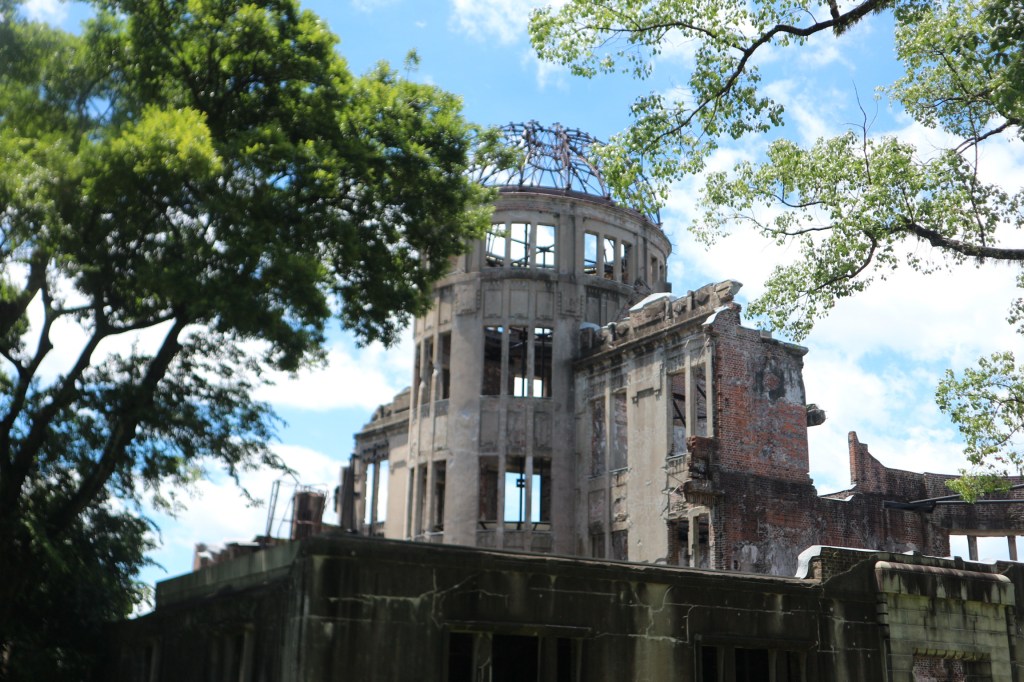
Up close, one came face to face with rubble taken straight out of history books. Except for a metal frame meant to reinforce the building in its ruined state, the dome and its surrounding structure remained largely untouched. A side-by-side comparison with old photographs revealed little to no differences. It was an awe-inspiring display of the city’s commitment to remember. Besides the dome, the entire surrounding area had been transformed into an outdoor museum of sorts, open 24/7 as a public park that welcomed residents and visitors alike, and reminded them of the ruin from which the city struggled to rise.
Punctuating the park was an actual, indoors museum dedicated to the city before and after the bombing. We decided to continue on our day with a walk through its exhibits. While most museums are contemplative in character, the Hiroshima Peace Museum was something else. It was somber. It was also pretty dark inside. Every unsaid word and unlit corner seemed to pay attention to the lives that were suddenly and indiscriminately ended by the bombing. Coming into the second floor, one was immediately greeted by photographs of the city in ruins. In the same room, a 3D animated model played out every second before and after the tragedy, demonstrating how a loud and bustling city could be silenced into death by something hardly larger than the trams that plied its streets.
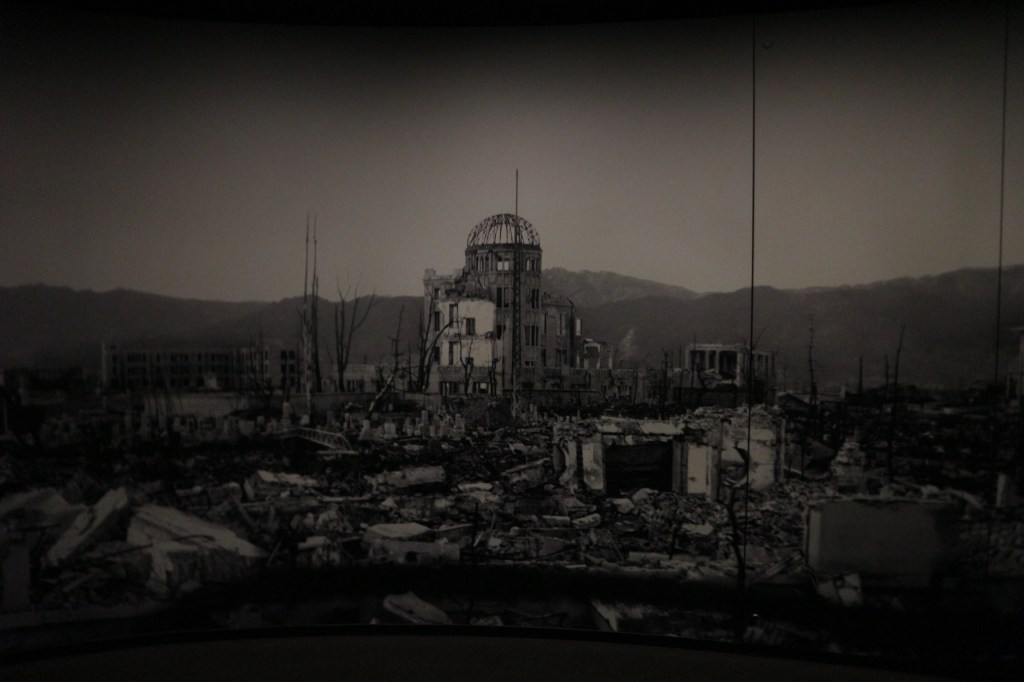
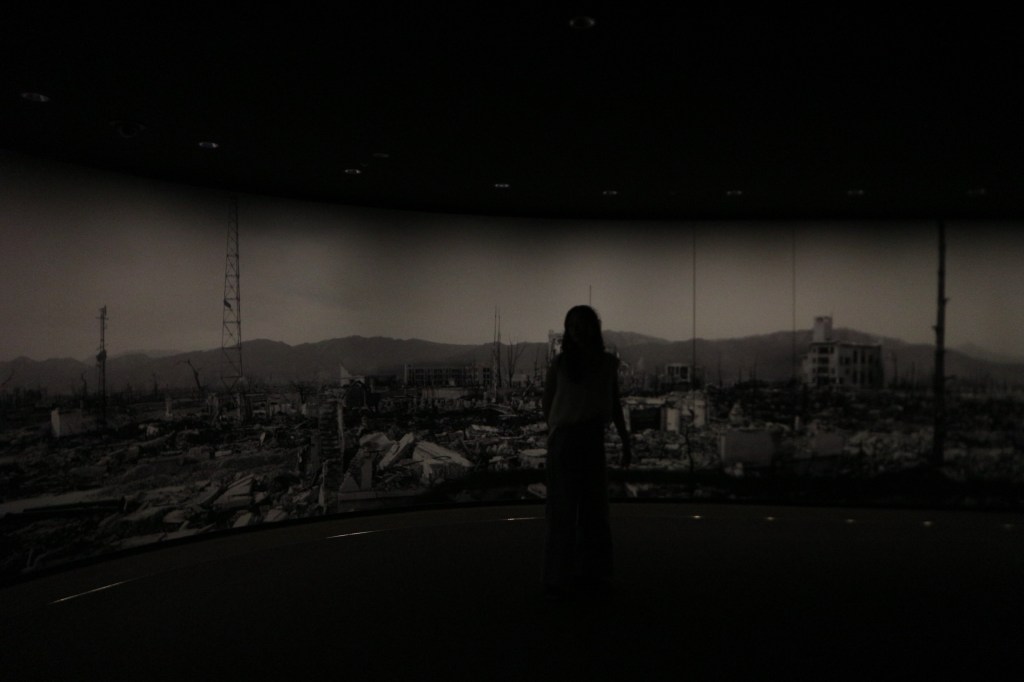
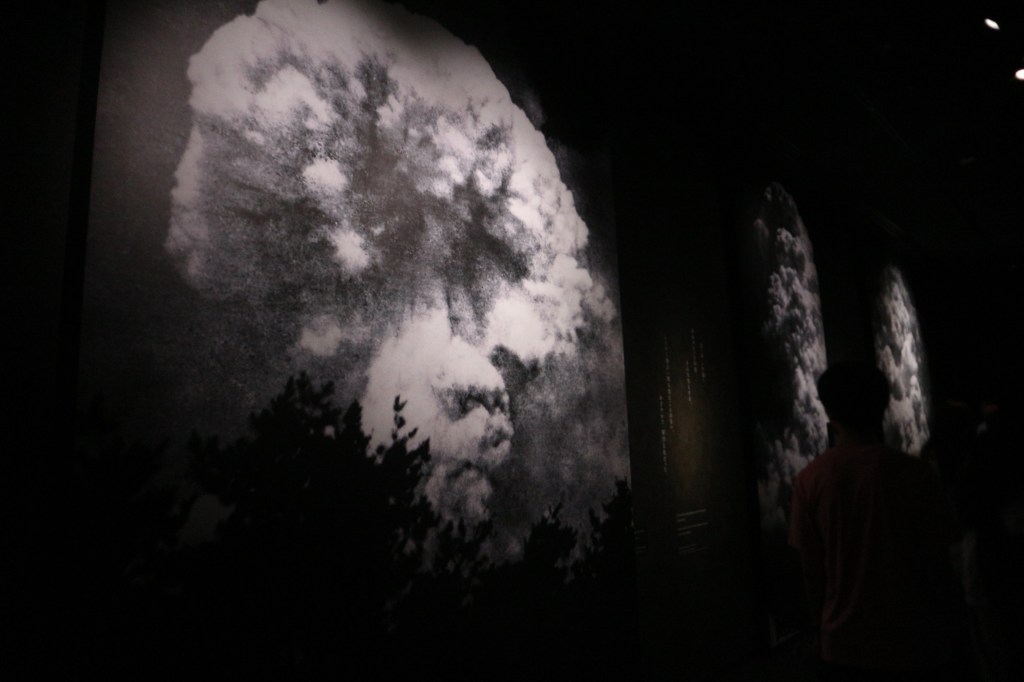
Another room showed photographs and mementos of the families that suffered through the bombing: grotesque depictions, some photographic, of singed flesh and blood; scorched lunchboxes and teared-off walls from structures bearing permanent shadows; another wall streaked with drops of the black rain of radiation that would later claim more lives that the explosion itself had left over.
One could not help placing oneself into the burnt clothes and imagining what it must have felt like to emerge from some basement to find your hometown transformed into hell on Earth, to still be walking wounded but already dead from the extreme dose of radiation. And to think that elsewhere, in the amories of countries like the United States, France, Russia, and North Korea, there exist thousands more of the same gadgets waiting to unleash the nightmare all over again.
While walking through the exhibits, we could hear one or two people stifling their cries. Suffice it to say, it was a heavy afternoon when we emerged into the daylight. We sat for a while in a lounge inside the museum with tall windows facing the entirety of the Peace Park. We had other things planned for the rest of the day: specifically, we wanted to sample some of the local restaurants, and sunset by the iconic torii at Miyajima, but for now we had to get settled first. History insisted.
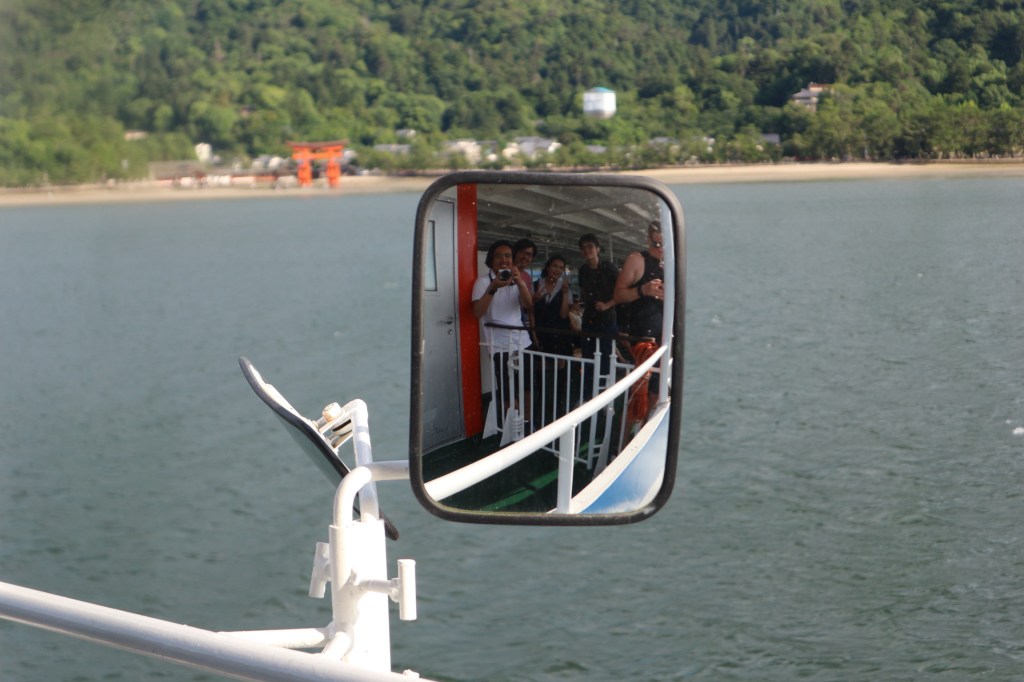
Fifty minutes on the tram towards the port at Miyajima-guchi and the city takes on an entirely new character. This time summery and laid back, we boarded the ferry towards Miyajima with couples and groups of old tourists also visiting the iconic shrine. It felt like a beach episode diversion in a usually serious anime series. We welcomed the salty smell of the sea and the cool breeze as we lounged on the ferry’s deck, watching the seaside shrine come closer and closer into view.
Immediately upon getting off on the other side, we were tempted into making a brief escape from the heat of the afternoon soon into an indoor bar selling unique cocktails and beers mixed with Hiroshima specialty honey. I ordered a martini soda for myself and a mojito for my wife. Our two friends each ordered a martini soda and honey-infused beer. The martini soda I regretted awfully: the martini itself tasted like battery acid, and the Hiroshima honey did little to assuage the bitterness. My wife’s mojito was miles better, and a taste of my friend’s beer reminded me you can never really go wrong with beer.
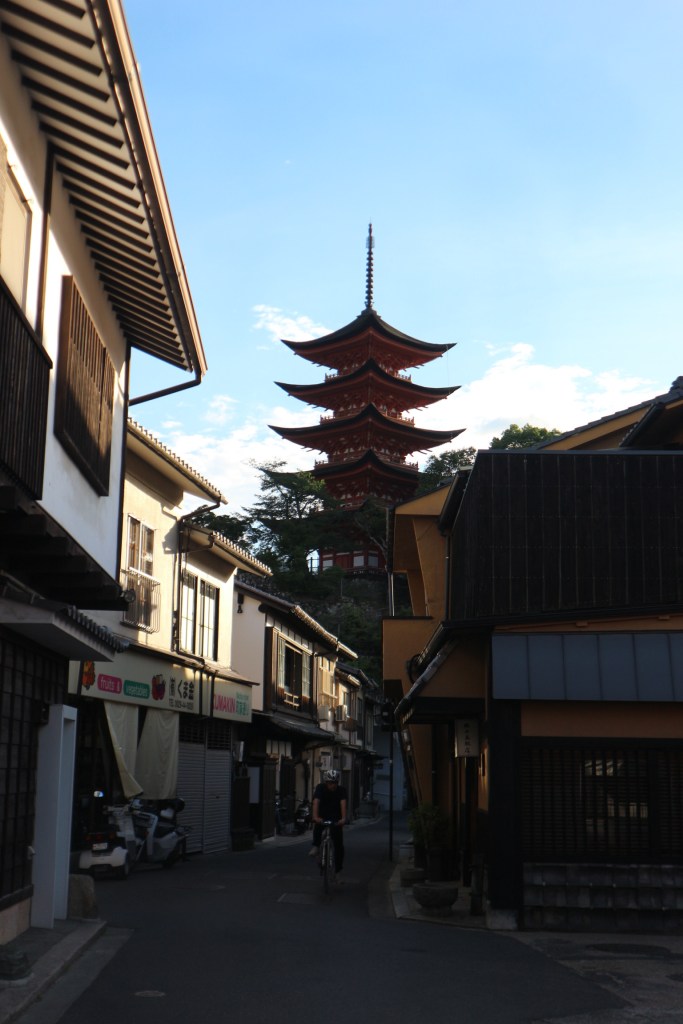
Lightly buzzed, we continued on our rambling path around the sights of the island. We walked a path called the Yamanobe Kamichi on the tourist map we picked up from the ferry station, which features a long stretch of street with old Japanese houses leading to a tall, five-storied pagoda. Following the street and taking photos, we eventually found ourselves at the Itsukushima Shrine, an old wooden shrine complex built on the water. Here we decided to wait for the evening tides to swell in so we can take photos of the torii beneath the setting sun.
 Dominic Dayta
Leave a comment