This sentiment may not be entirely understood by those who haven’t lived for an extended period in a country whose language is (still mostly) inaccessible to them, but arriving in the United Kingdom felt like a breath of fresh air. Don’t get me wrong: I love Japan. There’s a reason why it was at the top of my list of countries to do my PhD in. Since the first time I landed here eight years ago, I was – and still am – enamored by their culture, their history, and their food. But, like, Japanese is hard, man. In three years, one would think I’d have acquired the language, and sure, I can now call up a restaurant and make a reservation for this day and that time, then go there and order from the menu, but between research and the part-time jobs, I’ve gotten barely any further than the day-to-day essentials.
But in the UK, I was literate again. As in, 100% can speak, read, and write, all thanks to colonialism. Not by the UK exactly but by its spin-off across the Atlantic. Just upon arrival at Heathrow, Monica and I felt refreshed to be able to read every advertisement, every instruction. Coming up to the platform of the Elizabeth Line, we felt proud of ourselves for not being a nuisance in public because hey, did you hear that, they just made an announcement about which train is which and where to stand on the platform, and we totally understood it!
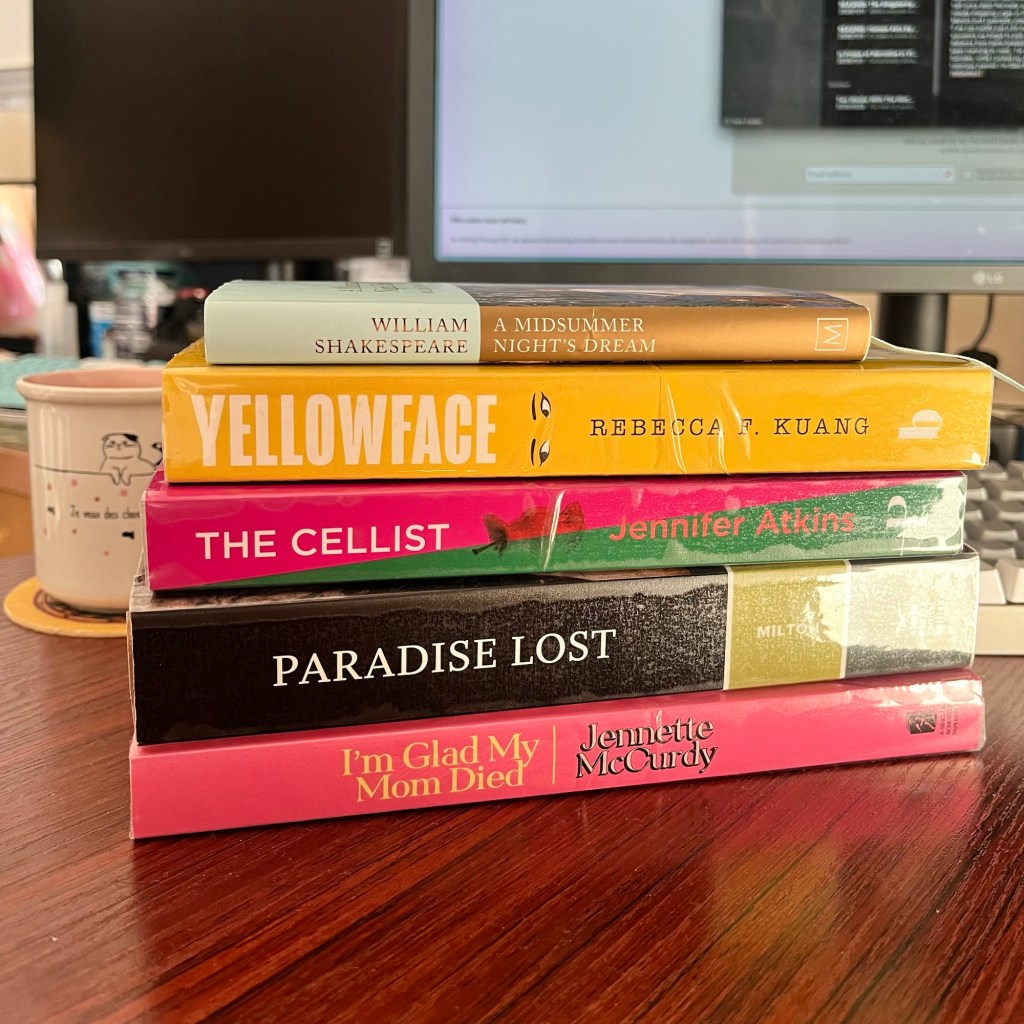
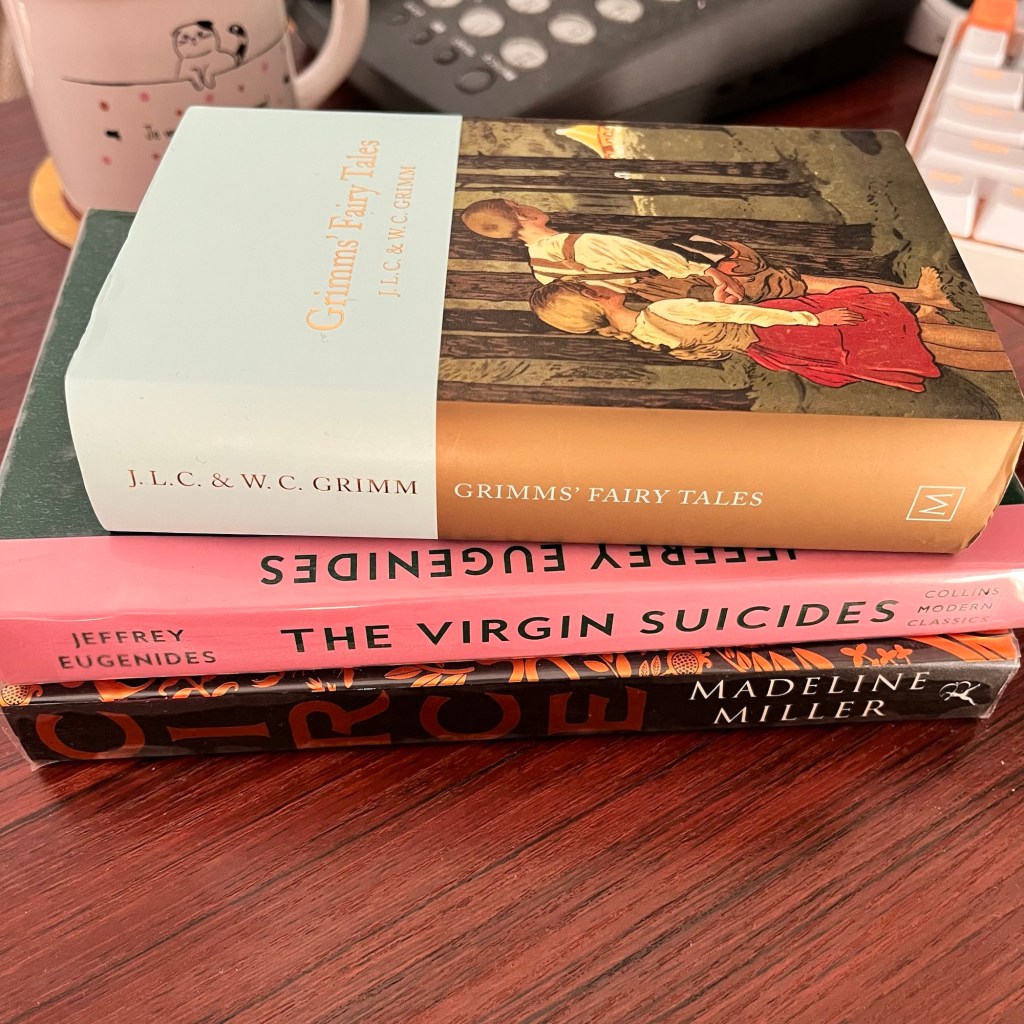
And so we come to the books: one funny thing about the itinerary that we had planned for our brief London tour was that it was filled with a visit to a bunch of bookstores. I love bookstores. Heck, back in college, whenever I’d get stranded at either the SM North EDSA or Trinoma malls and couldn’t get a ride back home from classes during rush hour, I’d while away the time at either Powerbooks or Fully Booked. I’d even find books that had been incorrectly replaced on the shelves by browsing customers and put them back in (what I thought was) their proper places. Even without buying anything, I could easily spend an hour just browsing, looking at what’s out there, for any new authors to watch out for, or any new release I’d like to buy when I finally put together the money for it.
In Japan, though, spending time at a bookstore felt moot, because obviously I can’t read. Not yet. I’m certainly working on it, but even from just the small amount of text on the cover I wouldn’t be able to tell if I’m looking at a new Murakami. Even katakana-filled half-translations of foreign works tire me out from the sheer amount that I don’t understand. Even in a place like Kinokuniya, the foreign books section is bound to be small, having no more than a shelf or two. This is something I respect, honestly, given that it’s the opposite way with bookstores back in the Philippines. But right now, for me, that means no Japanese bookstores just yet.
But in the UK, the bookstores are everywhere, and they are big. I’m pleased to find the British as a very literary people. Bookstores appear to cater to all sorts of people, from grey professor-ish types to even young kids. It’s so pleasant to see hip teenagers and young adults browsing the shelves for their next read. From cafes to train stations, it’s very common to see a paperback sticking out from someone’s purse or held precariously in one hand with a cup of Pret coffee. All through the week, I’m thinking, I love this place, but also, what can we do to make the Philippines more like this?
Back to the bookstores: every day of the conference I find myself spending the one-hour breaks in between sessions not at the function hall with catered coffee and light snacks, but at the Waterstones just across Malet street. Somehow there’s four floors in there, which in the ever-confusing European fashion means a ground floor and floors 1 through 3 above it. It felt like being back in college again, soaking up inspiration from the reams of inked-up dead trees around me, and everything – except the German, Spanish Italian, Arabic, etc. sections which were quite sizable as well – comprehensible, intelligible, available. I did end up buying two books on the last day of the conference, just before we headed Bankside to watch A Midsummer Night’s Dream at the Globe: a Norton Critical Editions copy of Paradise Lost, which is in my TBR pile for 2026. There’s also The Cellist, the debut novel of up-and-coming British author Jennifer Atkins who’d been in my radar for a few months before arriving in London.
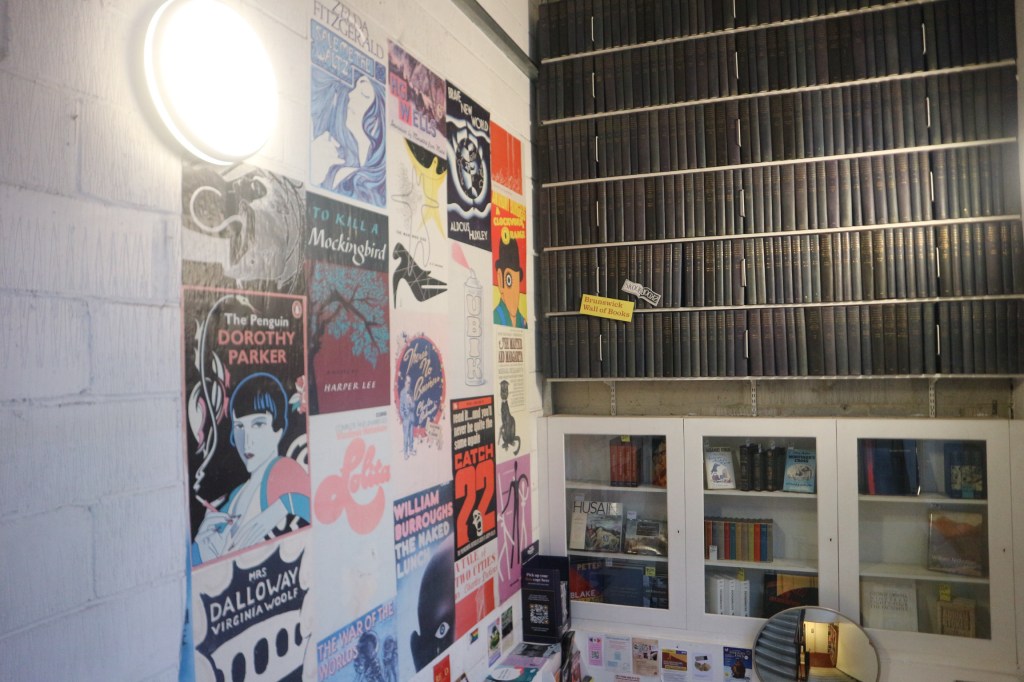
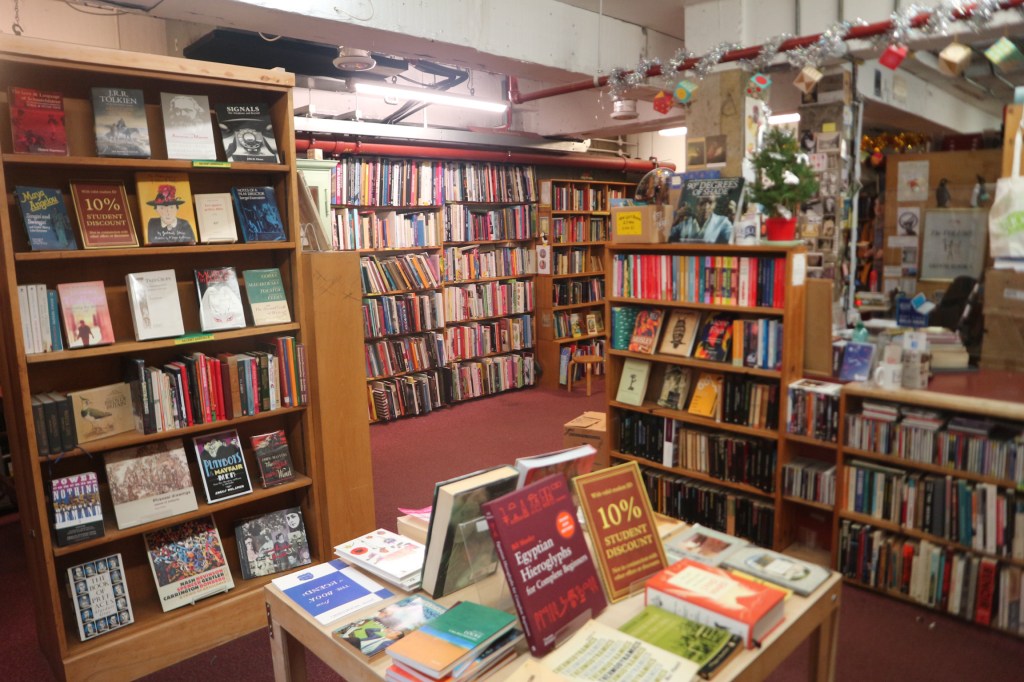
There’s also Foyles (actually still owned by Waterstones) at Charing Cross, which we stumbled upon on our impromptu walk through the West End district. It turns out this is their flagship “cathedral of books” shop, boasting over 200,000 books across eight(!) floors. And again for the non-Europeans like me: that’s a Lower Ground and Upper Ground, plus floors 1 through 6 above them. Unfortunately we couldn’t stay here too long given that our feet were already beat, having just walked all the way from Westminster (so much of the bus routes turned out to be cancelled that day due to a number of protests happening, plus the planned strike), though I did end up buying one book which I’ll talk about in another post.
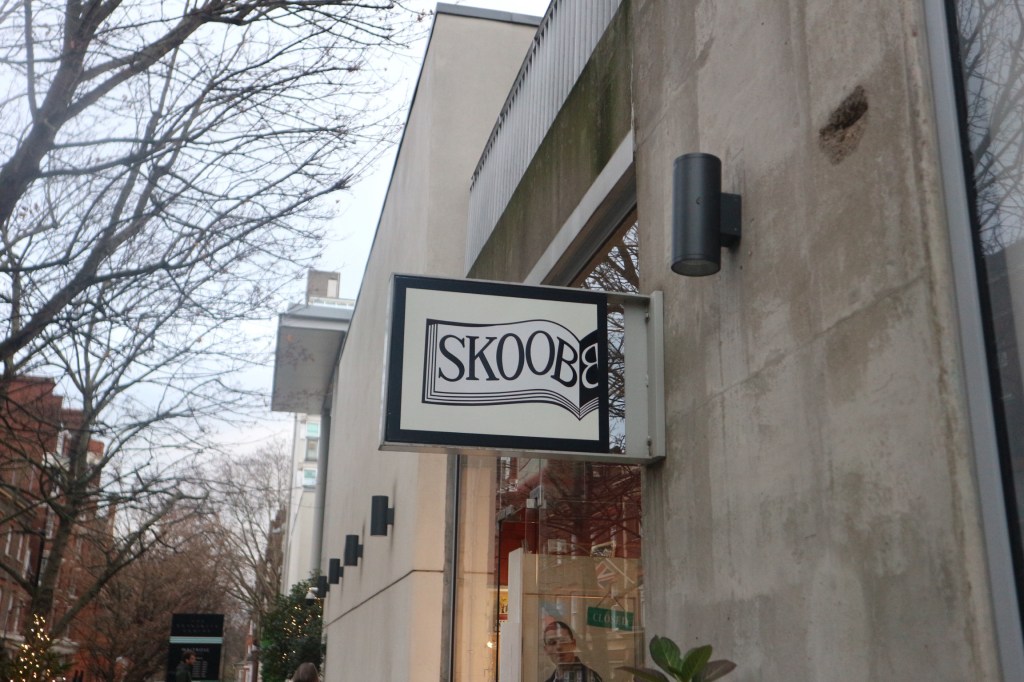
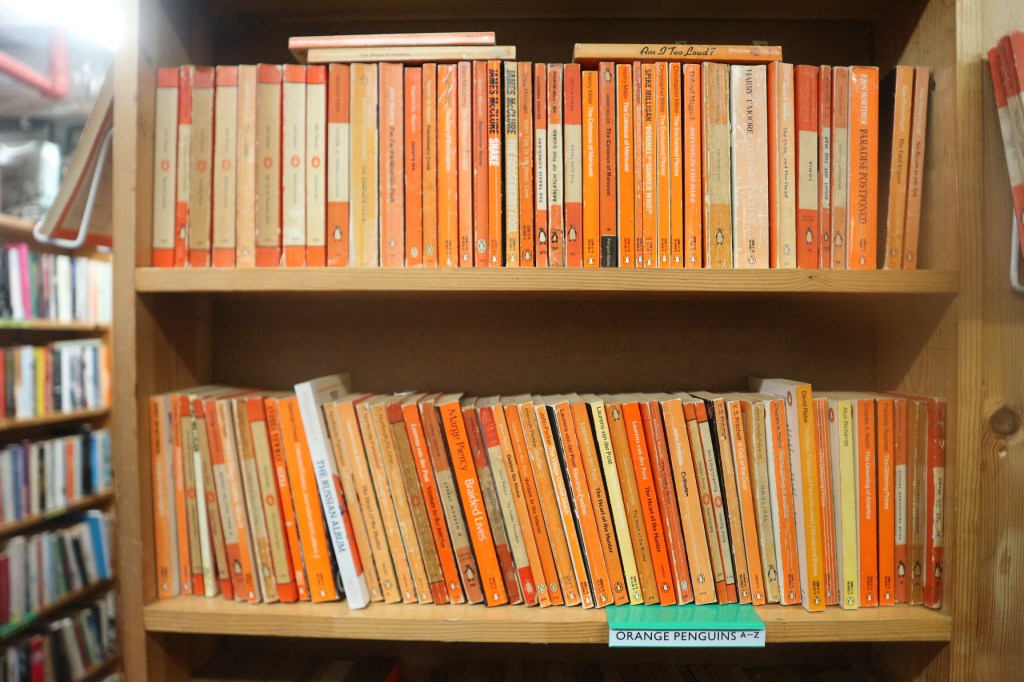
One last bookstore worth mention is Skoob Books, which was just a short walk from where the conference was taking place in Birkbeck. I walked over there twice. The first time, I forgot to check their business hours on Google Maps and found it locked. The second time was on my way back from Bankside to Birkbeck while my wife was having her guided tour at the Globe. The shop was recommended to me because of their wide collection of orange Penguin classics, which I was hoping to get more of since obtaining a copy of Thomas Mann’s The Magic Mountain.
The collection was wide indeed, though I couldn’t find an author I was actually interested in, and I didn’t just want to buy any old paperback. The bookstore itself was quite a treat. Smaller and more intimate than the shinier Foyles and Waterstones. A lot of the customers seemed to be regulars and were familiar to the staff, at least from what I could tell from their conversations over the counter. They sold only pre-loved books, and there’s certainly more of a dustier and aged feel to the store in general, but it’s one that should be familiar, if not beloved, to any passionate reader. It reminded me of my old haunt, Booksale, which had sadly shuttered up many of its stores by the time I left for Japan. While I didn’t end up buying anything here, it’s certainly not because I couldn’t find anything of interest. Quite the opposite: I found too many that I wanted to buy that I thought it was wiser to decline all of them, rather than buy one and regret the others. See? I’m not a spendthrift.
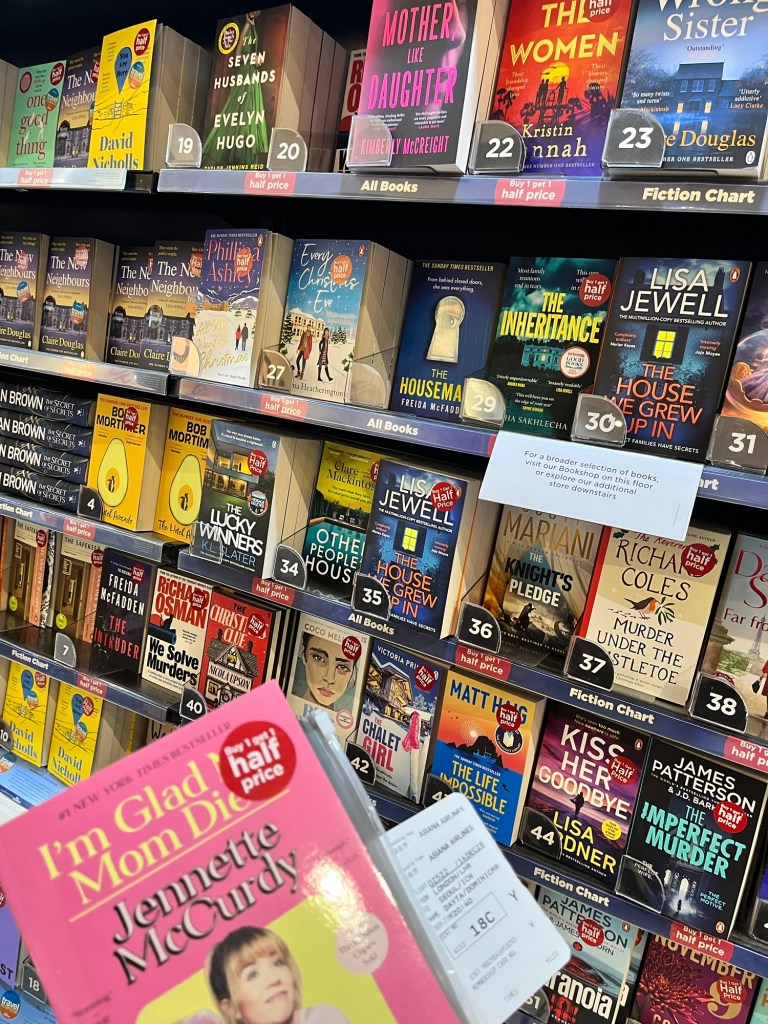
That was on our last day. And I thought by that time I was safe from further book-buying. When we arrived at Heathrow to check in to our flight back to Osaka, I had in my suitcase only Paradise Lost and The Cellist, the book I got at Foyles, another book purchased near South Kensington, and a hardback MacMillan editions copy of A Midsummer Night’s Dream that we got on a promo at the British Museum’s gift shop. Monica also got herself a MacMillan editions copy of The Grimm’s Fairytales as part of the British Museum promo.
But then we reached the gates, and imagine my pleasant horror to find that Heathrow, among all airports I’d been to in my life, had bookstore transit-side! And they were having a buy-one-get-one-half-price deal! Normally we’re pretty good at resisting the last-minute shopping urges at the airport, but this time was different. Monica and I promptly checked our respective bank balances to see if we can justify just a bit more book buying (and a few other souvenirs we forgot to pick up). Confirming that we were still a safe distance from bank-breaking, we picked up some books that we’d been meaning to read. For her that was Circe and The Virgin Suicides, while I picked up Jennette McCurdy’s (of iCarly fame) notorious memoir I’m Glad My Mom Died and R.F. Kuang’s Yellowface.
A Shakespeare show, and lots of book buying: this neatly summarizes our London trip, really. Even with how often I grumbled about the price of books (or anything really) in the UK, it turns out that hardly stoppered my excitement at finally getting my hands on books I can actually read. But I guess that’s just been my more than two decades long relationship with books, really: I break my back making money, then I spend it all on books. If I get the opportunity (and the pounds) to come back to London, I’d gladly do it all over again. Maybe next time I’ll make sure to bring an extra suitcase for the hardbound Dickens collection I was eyeing back at Skoob Books.
 Dominic Dayta
Leave a comment