Topping my rolling list of ongoing obsessions recently is the indie-turned-blockbuster smash hit horror movie Obsession (2026), which I saw over the weekend with my wife. Neither of us are big on the horror genre, but the movie in particular had two strong points working for it that really piqued our interest. First, there’s the fact that the movie was directed by Youtube and TikTok sketch comedian Curry Barker, whose work I’d been following for a while now. Then there’s the film’s supposedly deft (if the raving fan reactions online were to be believed) handling of toxic masculinity and horrific deconstruction of the manic pixie dream girl trope.
This is one of the very rare occasions that I’m reviewing a piece of media just as it’s coming out, so I’ll tread carefully with the spoilers. Obsession introduces us to Bear (Michael Johnston), who works at a local music store and harbors a massive, unrequited crush on his childhood friend and coworker Nikki Freeman (Inde Navarrette). Feeling his window of opportunity closing as Nikki informs him, prior to a night out with two other friends in their circle, that she is putting in her two weeks’ notice at the store in order to move and focus on building a writing career, Bear purchases a “One Wish Willow”, a mysterious novelty trinket that promises to grant its owner a single desire. Instantly, taking a page right out of The Monkey’s Paw, Nikki begins reciprocating his feelings with an intense passion.
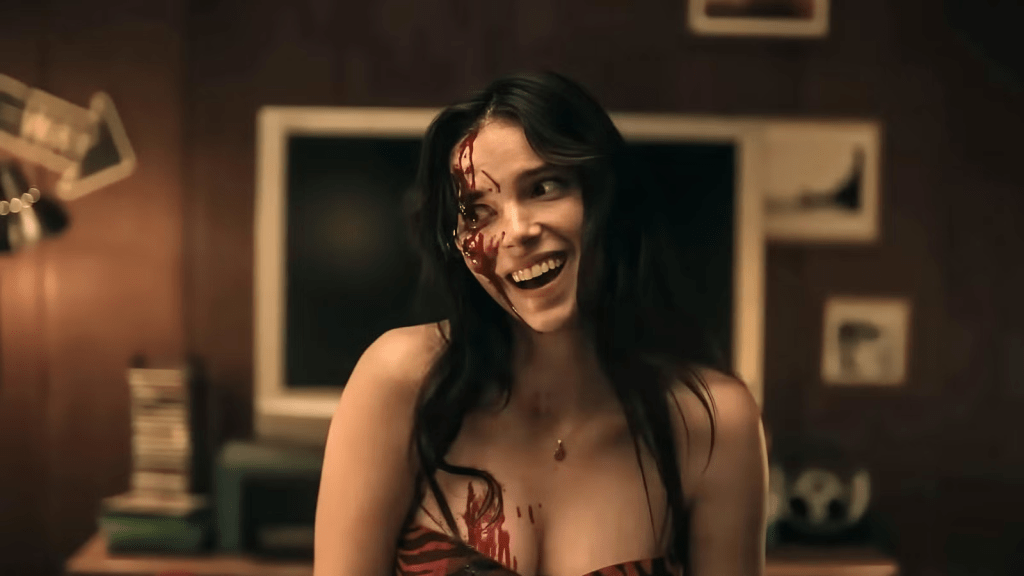
This fantasy, which at first is ballooned just short of romcom sweetness by a blithe and fluffy accompaniment, quickly devolves into a grisly nightmare as Nikki’s newfound devotion twists into violence. Stripped of her own autonomy by the sinister magic of the wish, her behavior grows increasingly erratic, leading to a shocking string of bloody consequences as her fixation spirals completely out of control. The film escalates the well-worn “be careful what you wish for” trope into a horrific exploration of romantic objectification.
As I alluded to in the beginning, part of what makes Obsession such a fascinating watch is how thoroughly it feels like a Gen-Z phenomenon, born directly from the contemporary internet creator economy. Director Curry Barker and his creative partner Cooper Tomlinson (starring in the movie as Ian, a part of Bear and Nikki’s circle) initially built their audience as the sketch comedy duo “that’s a bad idea” on Youtube and TikTok. They evolved from film school dropouts into viral sensations churning out short-form comedy taking on subjects like the absurdities of everyday expressions, and colorful characters breaking the monotony of day-to-day suburban life. But at the same time they were hitting platform records with their sketches, it turns out Barker was also quietly cutting his teeth (that might make for a good sketch – don’t hesitate to call, Barker and company) on low-budget horror films.
It was the 2022 horror short, The Chair, that would eventually provide Curry Barker with his Hollywood launchpad. The short caught the attention of a producer, who reached out to Barker with the intention of adapting The Chair into a feature film. Instead, Barker used the opportunity to pitch a completely different concept: Obsession. This move secured the indie film a $750,000 budget and landed its director official representation, and the film would go on to premiere at the Toronto International Film Festival. On its way to the theaters, Obsession sparked a bidding war, which was ultimately won by Focus Features for over $14 million.
A hasty Google search reveals that it wasn’t just Barker and Tomlinson whose bona fides rest with the internet. Inde Navarrette, the actress behind Nikki, apparently has some background as a Twitch streamer. Following the massive success of Obsession, fans have unearthed her old streams playing titles like The Last of Us and Detroit: Become Human. Even Michael Johnston, who plays Bear, appears to have gotten his start in the industry as a kid by coding 2D Flash games and recording the character voiceovers from a makeshift studio in his bedroom. The fact that so much of the core cast cut their teeth natively on the internet only adds to the film’s identity as a Gen-Z success story.
But back to Obsession: it’s always fascinating (and honestly a bit funny) to watch what happens when a well-crafted genre film penetrates into the mainstream. Obsession has rapidly become what one TikToker aptly dubbed “baby’s first horror movie” for an entire demographic of viewers. The internet is currently flooded with deep-dive analyses dissecting the film’s every frame, with audiences arguing back and forth over whether Bear is a monstrous villain or a tragic victim of his own naivety. Viewers are pausing to scrutinize Inde Navarrette’s facial expression during the film’s intimacy scene. It’s a testament to the movie’s grip on the culture, I believe. And it also gauges how audiences are grappling with the movie’s psychological discomforts.
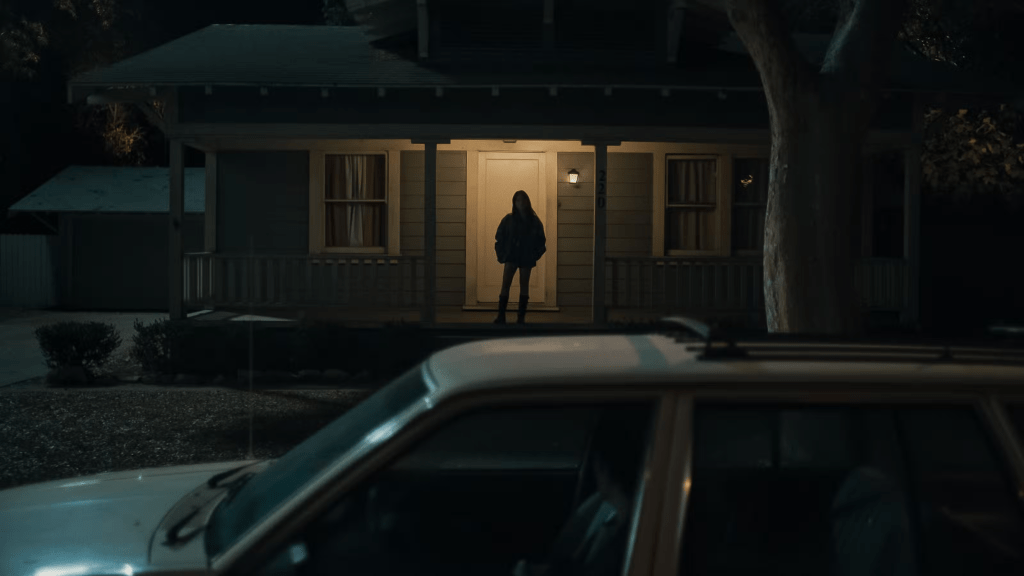
In the spirit of community, allow me to contribute some of my own takes. The true terror of Obsession lies in its dissection of male insecurity. It really is impressive how faithfully Barker, a male auteur, navigates a narrative that is fundamentally rooted in women’s experiences and issues. Several people online have raised the question as to whether the movie might have been scarier had it been written from Nikki’s perspective. But instead of trying to speak directly for women, Barker tackles the subject by holding a mirror up to the insidious nature of the “nice guy” complex. Bear’s actions aren’t born of traditional villainy, but of a pathetic, deeply ingrained entitlement: a belief that his unrequited affection is an injustice that needs to be corrected. The magic of the wish merely strips away the polite veneer of modern romance, exposing the attendant violence in demanding someone’s love for the sake of self satisfaction. The horror, in other words, is how a man’s bruised ego can mutate into the total objectification and erasure of a woman’s agency.
To be sure, Barker doesn’t let the surrounding community off the hook, either. Through Bear and Nikki’s social circle, the movie makes a gesture towards the terrible ecosystems that enable this toxicity to thrive. Bear is surrounded by enablers who consistently prioritize his feelings over Nikki’s obvious deterioration. There’s Ian, whose toxic camaraderie directly sabotages Bear’s few moments of clarity and better judgment, and Sara (Megan Lawless), whose “pick-me” attitude reveals she cares far more about winning Bear’s attention than being a genuine friend to Nikki.
Throughout the movie, even as things are circling the bloody drain rapidly and very visibly, no one bothers to actually reach out and check in on Nikki. The collective concern is always, inevitably, centered on the man’s well-being. This systemic complicity reaches its peak when the crystal shop owner explicitly tells Bear that he has “a moral responsibility” to stay with her. It’s a damning indictment of a society that routinely demands women sacrifice themselves to manage male emotions.
Perhaps the film’s most chilling sequence, one that resonated with me and my wife harder than any bloodcurdling scream (which were very well rendered, consistently, by Navarrette) or well-timed jumpscare, happens when Nikki, in a fleeting moment of lucidity, begs Bear for mercy. Fully aware that an “entity”, another Nikki, born of the wish has taken over her, she pleads with him to kill her. Bear, now confronted with the reality that the true Nikki is trapped within and suffering, reacts with neither guilt nor compassion. Instead, his wounded pride flares up. He shoots back, “What would be so bad about being with me?”
The film works, I believe, because Barker refuses to give the audience an easy read on Bear’s psychology. Is this still the naive, hopeless romantic Bear in denial, genuinely incapable of grasping the supernatural nightmare he has unleashed upon someone so close she admitted to seeing him as her brother? Or is this an antagonist at par with, or maybe even beyond, the One Wish Willow itself? A bruised ego so toxic that he is insulted a woman would readily choose death over his forced affection?
Obsession ties its internet-native origins directly into its core messaging, making its Gen-Z identity as something more than a production quirk. It’s a bold declaration that a new generation of creators is ready to take the reins of the cultural conversation. The film brings a sharp, post-#MeToo perspective to contemporary gender politics, one that is willing to square up to the ugliest facets of masculine toxicity without completely denying or flattening the male side of the equation. Propelled by a cast of fresh faces (hell, the most star power this movie has is Andy from Conan), the movie feels like such a breath of fresh air — at least, after it’s done suffocating you with its amazing, amazing set design, cinematography, and soundtrack. A new crop of talent have entered the scene. I, for one, am excited about all the great movies in store for us.

 Dominic Dayta
Leave a comment