It’s August, meaning it’s that time of the year again when I wax disappointed over not being in the Philippines to enjoy the Cinemalaya film festival. This festival has always been dear to me, as it’s been the source of many of my favorite movies (not just local movies, mind you), from Marie Jamora’s coming-of-age classic Ang Nawawala (2012), Jerrold Tarog’s ghost story cum romance Sana Dati (2013), to political and hiphop heavyweight Respeto (2017). It’s the movie festival the MMFF once tried and failed to be, and it’s probably not too reductive to say it’s become the beating heart keeping the film industry thriving.
Recently, I’ve read some coverage tangential to the festival about a statement made by veteran director Joey Reyes, current chair of the Film Development Council of the Philippine (FDCP),
“It’s a fallacy to say na buhay na buhay ang pelikulang Pilipino, [na] buhay na buhay ang Cinemalaya. Ang pelikulang Pilipino ay naghihikahos.” (It’s a fallacy to say that Philippine cinema is alive and thriving, that Cinemalaya is alive and thriving. Philippine cinema is struggling.) Link.
Direk Reyes points to the massive success that foreign (specifically, American) films like Spider Man: Brand New Day, the recent web-slinging entry to the Marvel Cinematic Universe (MCU), and Christopher Nolan’s adaptation of The Odyssey while local productions continue to flounder within their own market. As things go on the internet, this immediately sparked a heated discussion on platforms like Threads and X (formerly Twitter), and one notable post compared the success of the two foreign titles mentioned with two recent releases that underperformed at the box office: Sisa and Midnight Girls.
Others highlighted a frustrating hypocrisy within the moviegoing public. Audiences frequently complain that local films are “low quality,” have repetitive plots, or rely too heavily on established “love teams”. However, other users noted that when critically acclaimed films that break these stereotypes are released, featuring fresh plots, excellent acting, and zero love teams, audiences still refuse to buy tickets.
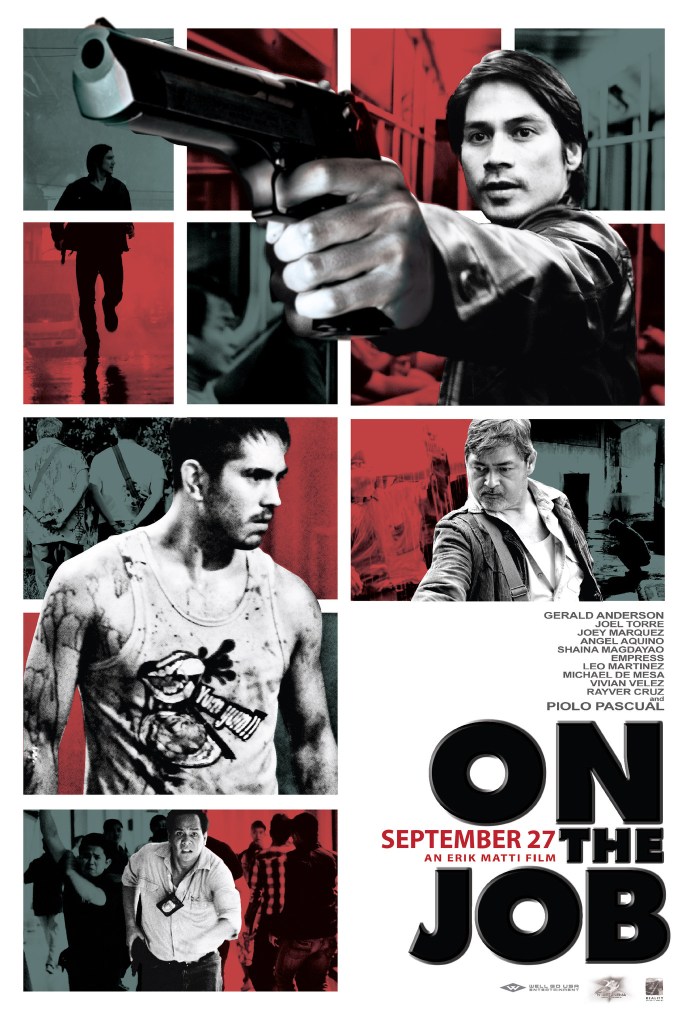
This topic has been buzzing around in my mind for some time, though not necessarily about local cinema, that I figured this was the perfect opportunity to jump into the discussion. First, we need to get matters of quality out of the way: Filipino cinema has amazing movies to offer. Just off the top of my head I can name quite a number of films, both recent and not, that I reckon could give Hollywood a run for its money. From comedic family dramas like Patay Na Si Hesus (2016), to even a zombie thriller like Outside (2024) that, from a pure narrative standpoint is worthy of standing up with the giants of the genre. Also, have we already forgotten about On The Job (2013) and Metro Manila (2013)? Weren’t we all just raving over Tarog’s third entry to the Bayaniverse?
Not everyone joining the discourse online blamed the audience’s tastes, and it was this particular vein I found myself most agreeing with. A significant portion of the debate pointed the finger at systemic industry issues, arguing that local films simply aren’t marketed well enough. Many users admitted they hadn’t even heard of the acclaimed films being discussed until the online debate sparked. Furthermore, commenters heavily criticized local cinemas for pulling Filipino films from theaters too quickly to make room for foreign blockbusters, rarely giving them a chance to build an audience through word-of-mouth.
But I argue that we can look even further up the chain. While Filipinos preferring to see Sisa instead of Spider Man is to some degree predicated on moviegoer taste, it should also be considered in the discussion that Spider Man and other Hollywood productions behind it really are just financial juggernauts. Spider Man in particular was helmed by Marvel Studios with a budget of US $225 Million — that’s just shy of PHP 14 Billion by current exchange rates. For reference, that’s the amount estimated to have been lost under the controversial flood control project corruption scandal.
Consider Curry Barker’s indie-turned-blockbuster hit Obsession, which I raved about only recently. At a budget of US $750,000, it’s already considered a low-budget miracle. Converting that to Philippine pesos, that’s just shy of PHP 43 Million which by our industry’s standards is already at blockbuster levels. I don’t really make a habit of looking at film budgets and blockbuster earnings (and I’ll get into this shortly), but only films like Gomburza (2023) at PHP 53 Million and Rewind (2023) at PHP 55 Million tend to reach this kind of luxury. The rest are forced to make masterpieces with scraps. The 2025 Cinemalaya grant for a winning script is pegged at PHP 2 Million, which was already up from only PHP 1 Million from the previous years.
But surely Hollywood is the biggest fish out there? If it came down to Hollywood just having more money to burn, then how come other countries’ film industries aren’t suffering quite as much? This is where the second rail in this rotten system comes into play: the lack of import controls on foreign-made films. The Philippines operates what is essentially an open-door policy for Hollywood. While there have been attempts at regulation, they lack the legal teeth of neighboring countries.
For example, in 2019, the Film Development Council of the Philippines (FDCP) issued Memorandum Circular No. 2019-01, which stated that an “equitable ratio” between local and foreign films should be observed in theaters. However, this policy failed to specify any actual percentages, screen time minimums, or hard quotas. Without legally binding metrics, the mandate is effectively useless against the financial muscle of Hollywood distributors. Consequently, local films are forced into a sudden-death, opening-weekend brawl with global blockbusters for the exact same limited screens.
This is worlds (dare I say, multiverses) removed from how other countries balance the scale between their own local industries and the foreign market. For example, to prevent Hollywood from swallowing its domestic market, South Korean theaters are required by law to screen Korean films for a minimum number of days per year, at one point mandating 146 days, before reducing it to 73 days under heavy US trade pressure. By artificially shielding their own small fish from Hollywood’s big fish, the Korean government guaranteed local films a theatrical revenue stream. This allowed their industry the incubation time to build the capital, infrastructure, and technical quality required to eventually fight Hollywood on equal footing.
Japan has a slightly different approach to this, but achieves the desired result nonetheless. For instance, Nolan’s Odyssey isn’t even screening here until September, whereas in the Philippines it (along with most Hollywood releases) has been through the theaters almost concurrently with the US Market. Because domestic industry giants like Toho, Toei, and Shochiku control both the production of films and the physical movie theaters themselves, they have the incentive and the power to prioritize their own highly lucrative local slates (think anime features, live-action adaptations, and domestic dramas), forcing Hollywood studios to wait in line for gaps in the release schedule. In Japan, the domestic industry acts as the landlord, and Hollywood is just a guest.
By following the free market fallacy, the Philippines has allowed a ridiculously asymmetric battle between a film like Sisa, which probably had no more than PHP 2 Million to work with, and Brand New Day which can burn hundreds of Sisas worth on marketing alone. A globalized market guarantees an outsized advantage to anyone with more cash in their pockets. So I think it’s entirely unfair to blame the state of local cinema on the moviegoing taste. It goes beyond spectacle vs low profile stories. Filipino films are competing against a century of entrenched American soft power and billions of dollars in global marketing infrastructure. We should consider that maybe the economic architecture of the Philippine box office is structurally designed to ensure Hollywood always wins.
Having gone at painful lengths about the commercial challenges that’s keeping Filipino cinema at the wayside, I would like to close this rant with a statement as to why talking about the commercial side of the industry irks me. At the end of the day, I think it’s sad to see how the local film industry is being forced to play by the rules of Hollywood’s art-as-factory model. This ties into Theodor Adorno and Max Horkheimer’s “Culture Industry”: under late-stage capitalism, art is no longer evaluated by its aesthetic value, its challenge to the status quo, or its reflection of authentic lived experiences. It is evaluated strictly by its commercial viability.
The result of this is that commerce dictates the conversation, and throws all other artistic considerations by the wayside. Consider standard conversations in the mainstream when a Hollywood film is produced: most discussions tend to focus not so much on what the film is trying to say, or the technicalities that it tried to achieve with lighting, practical effects, or character work, but on how much it made in ticket sales and streaming. When the visibility and public appreciation of a movie falls upon whether it earns enough ticket sales to keep its place in the cinemas before SM or Ayala flood the screens with the one hundredth Marvel film, ABS CBN and Viva Films aren’t going to have much space in the budget for a sad, beautiful, tragic portrayal of Filipino life. First and foremost, it’s gotta sell.
Which is how we end up having love teams in the first place. Love teams are safe. Love teams are marketable. When Alden Richards and Maine Mendoza reprised their beloved TV characters for the 2015 MMFF entry, My Bebe Love (2015), they earned the production company a whopping PHP 385 Million. You pair Richards with Kathryn Bernardo on a project by Cathy Garcia-Molina, and you get the highest-grossing Filipino film of all time.
Under this model, the nuances of life in the developing world are flattened out to appeal to a standardized, globalized palate. Stories like Sisa and Midnight Girls, or Rafael Manuel’s Sundance darling Filipiñana, despite their critical successes, will continue to struggle attracting the interest of the moviegoing public simply because it doesn’t contain the spectacle, the pleasing formulas, that are demanded by docile entertainment-seekers created by a commercialized aesthetic. Bruce Baugh explains it best, so I’ll give him the final word:
“not only is existing popular art not emancipatory in fact, being mere entertainment, but by its very nature as a product destined for mass consumption it has no possibility of being so, since the accessibility to the masses that makes it saleable is an indication that it does not produce the painful psychic dissonance through which the individual can be made aware of alienation. Mass art pleases, and what pleases, pacifies.”


Leave a Reply